2026 Best Heart Biopsy Devices for Global Buyers

Heart disease remains a major global health burden. The World Health Organization reports that cardiovascular diseases caused approximately 17.9 million deaths in 2019. The American Heart Association’s 2024 Statistical Update also shows persistent growth in cardiovascular risk worldwide. These figures explain why reliable tissue diagnosis still matters in advanced cardiac care.

This guide examines the 2026 best heart biopsy devices for global buyers. It focuses on endomyocardial biopsy forceps, catheter-based systems, tissue retrieval performance, and procedural control. Buyers searching for “biopsy heart” solutions should assess more than catalog specifications. Shaft flexibility matters inside tortuous vessels. Jaw design affects tissue capture. Clear fluoroscopic markers can improve positioning during delicate procedures. Sterile packaging and traceability also deserve close attention.

Regulatory status must be verified in each target market. FDA clearance, CE marking, ISO 13485 certification, and local registration may involve different requirements. The International Medical Device Regulators Forum promotes regulatory alignment, but implementation is not uniform. That creates practical purchasing risks.

Clinical evidence should lead the comparison. A device with strong engineering may still have limited independent outcome data. No ranking is perfect. Hospital teams should review biopsy yield, sample quality, vascular access needs, complication profiles, and operator training. Published studies, manufacturer instructions, and post-market surveillance offer stronger evidence than promotional claims.

This article uses guidance from WHO, the American Heart Association, and international medical-device standards. It also considers procurement realities, including service support, replacement availability, and total ownership cost. The “best” device depends on anatomy, indication, workflow, and local regulation. That point is easy to overlook.
2026 Best Heart Biopsy Devices for Global Buyers

What Are Heart Biopsy Devices and How Do They Work?

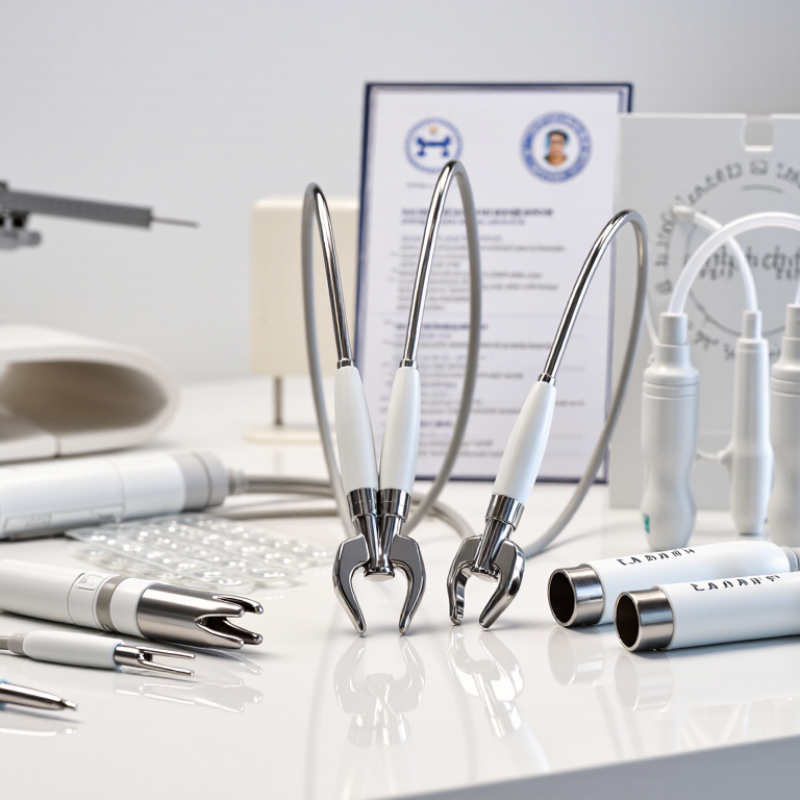
Heart biopsy devices are specialized tools that remove a small piece of heart tissue for laboratory examination. Most are flexible catheter systems with tiny grasping jaws. Clinicians guide them through a vein, often from the neck or groin, toward the right side of the heart. Imaging helps confirm the catheter’s position before tissue collection.

The device opens against the inner heart wall and captures several small samples with controlled pressure. These specimens are placed in preservation containers, then examined by pathologists under a microscope. Testing may help investigate transplant rejection, myocarditis, unexplained inflammation, or unusual tissue changes.

A technically successful procedure does not always produce an adequate sample. That limitation deserves attention.

For global buyers, practical evaluation matters as much as product specifications.

Check jaw performance, catheter flexibility, tissue recovery, sterile packaging, and compatibility with local imaging equipment. Regulatory clearance, quality-system documentation, traceability, and clinical evidence should be reviewed before procurement. Staff also need clear instructions for preparation, handling, and disposal.

Small sample, precise purpose. Device selection can influence sample quality, but operator experience and pathology methods remain equally important.

Key Types of Heart Biopsy Devices for Clinical Use

2026 Best Heart Biopsy Devices for Global Buyers

Key Types of Heart Biopsy Devices for Clinical Use

Heart biopsy devices differ by access route, tissue target, and operator control. Flexible endomyocardial bioptomes remain common for right ventricular sampling. Their small jaws collect several tissue fragments through a venous catheter. Steerable sheaths improve reach near the septum and reduce difficult catheter movement. Transseptal systems support selected left-sided procedures, but they require advanced imaging and structural expertise. Surgical biopsy instruments remain useful when open access is already planned.

The 2023 ESC Guidelines identify endomyocardial biopsy as important when tissue findings may change treatment. The 2024 ISHLT Adult Heart Transplant Report recorded more than 6,000 adult heart transplants in its latest annual cohort. That volume supports continued demand for surveillance biopsy tools. A 2024 clinical review reported major biopsy complications generally below 1% in experienced centers. Still, sampling error remains possible. More tissue does not always mean better tissue. Device selection should match anatomy, suspected disease, imaging findings, and laboratory support.

Tips: Check jaw closure under magnification before use. Confirm catheter compatibility, shaft flexibility, and retrieval force. Ask whether the device supports repeated samples without crushing tissue. Training matters. Cost alone is a weak buying metric. I would also review local complication data, because published results may not reflect every hospital.

Essential Features for Comparing Heart Biopsy Devices

When comparing heart biopsy devices in 2026, buyers should examine clinical handling, not only purchase price. The ISHLT 2024 Annual Data Report recorded more than 6,500 adult heart transplants in 2023, showing the continuing need for reliable myocardial surveillance. WHO reports that cardiovascular diseases cause approximately 17.9 million deaths annually. These figures reinforce the importance of dependable tissue sampling.

Start with the device’s outer diameter, shaft length, jaw opening, and tip flexibility. A smaller profile may reduce vascular trauma, but it can also limit tissue capture. Check whether the jaws obtain a visible specimen without excessive compression. Radiopaque markers should remain clear under fluoroscopy. Compatibility with common sheaths matters during urgent procedures. Buyers should also review sterility validation, packaging integrity, lot traceability, and shelf life. Ask for data on sample adequacy, retrieval success, and device-related complications. Independent clinical evidence is more useful than promotional claims. A perfect device does not exist. In practice, operator training and anatomy can change results significantly. This is where many comparisons become too simple. For each model, record insertion resistance, fluoroscopy time, tissue quality, and failed passes during supervised evaluations. Reports from the European Association of Cardiovascular Imaging and transplant centers can add context, but their populations may not match every hospital. That limitation deserves attention. Procurement teams should compare verified performance, local regulatory status, after-sales training, and total procedure cost before approval.

2026 Best Heart Biopsy Devices for Global Buyers

This comparison highlights two essential procurement specifications for heart biopsy devices: typical outer diameter and working length. Smaller profiles may support easier vascular access, while longer working lengths can improve reach in larger patients or complex anatomy.

Values represent typical specification midpoints from commonly used device categories and are intended for preliminary comparison only. Buyers should confirm exact dimensions, sample-jaw design, steerability, compatibility, sterilization status, and regulatory clearance in the current manufacturer instructions for use.

Safety, Accuracy, and Regulatory Requirements

2026 Best Heart Biopsy Devices for Global Buyers

Safety, accuracy, and regulatory compliance should guide every heart biopsy device purchase in 2026. A suitable device needs a controlled distal tip, flexible construction, and clear radiopaque markers. These details help clinicians reach the target while reducing vessel trauma and sampling errors. The handle should provide stable control, even when gloves are wet or procedures become stressful.

Accuracy depends on more than the catheter. The device should collect adequate myocardial tissue without excessive fragmentation. Compatible imaging guidance, secure specimen retrieval, and clear depth markings can improve consistency. Buyers should review published performance data, failure rates, and user training requirements. Small differences matter.

Regulatory evidence must match the destination market. Suppliers should provide quality-system certificates, risk-management records, biocompatibility data, sterilization validation, and clinical evidence. Requirements may differ across the United States, European Union, United Kingdom, and other regions. A certificate alone does not prove suitability. Importers should verify product registration, labeling, unique device identification, shelf life, and complaint-handling procedures. Packaging deserves attention too; a damaged sterile seal can cancel an otherwise strong evaluation.

Real-world testing remains valuable. Ask clinicians to assess grip, visibility, sample quality, and withdrawal control during simulated cases. No device is perfect. A design that performs well in one anatomy may feel less predictable in another. Buyers should document these limitations before signing a long-term supply agreement.

How Global Buyers Can Select the Right Device in 2026

Choosing the right heart biopsy device in 2026 requires more than comparing prices or catalog photographs. Global buyers should match the device with the planned procedure, tissue target, catheter pathway, and operator experience. Endomyocardial biopsy forceps should provide controlled opening, reliable tissue capture, and clear feedback during advancement. Small samples can be difficult to handle.

A practical assessment should review tip diameter, shaft flexibility, radiopacity, working length, and compatibility with existing catheter systems. Buyers should request documented performance data, sterilization instructions, shelf-life information, and traceability records. Regulatory approval in one market does not automatically permit use in another. Local clinical and regulatory teams must verify each requirement.

Training and after-sales support also influence safety. Ask whether operators can receive structured instruction and whether replacement parts are available within a reasonable time. Packaging should protect delicate components during long-distance transport, including exposure to heat or humidity. Cost matters, but an inexpensive device may create hidden expenses through failed sampling or repeated procedures. No device is perfect. Even well-designed tools can perform differently across anatomy, imaging conditions, and operator technique. Buyers should test samples when possible, collect feedback from cardiologists and nurses, and document weaknesses before signing a large supply agreement. Availability alone is not proof of suitability.