2026 Top Leather Recliner Sofa Sets Buying Guide
A Leather Recliner Sofa Set can turn a living room into a place for reading, movie nights, and quiet naps. But the right choice is not defined by appearance alone. Seat depth, back support, recline range, and room clearance all affect daily comfort. Measure the wall and walking paths before shopping. A fully extended footrest needs space, too.
Furniture designer William Morris wrote, “Have nothing in your houses that you do not know to be useful or believe to be beautiful.” That principle suits a major furniture purchase. Look beyond the leather’s color. Ask whether the upholstery is full-grain, top-grain, or bonded material, and check the maker’s care instructions. Examine frame construction, recliner mechanisms, cushion support, and warranty terms. Details matter. A soft showroom seat may feel different after an hour at home.
This 2026 buying guide compares styles, materials, features, and practical costs to help you narrow your options. It also considers household needs, from compact rooms to busy family spaces. Comfort is personal. Photos and product descriptions cannot replace sitting in the sofa, if a showroom visit is possible. Even careful research leaves some uncertainty; leather changes with use, and mechanisms can require maintenance. A thoughtful decision balances looks, fit, durability, and the way you actually relax.
Understanding Leather Recliner Sofa Set Types and Configurations
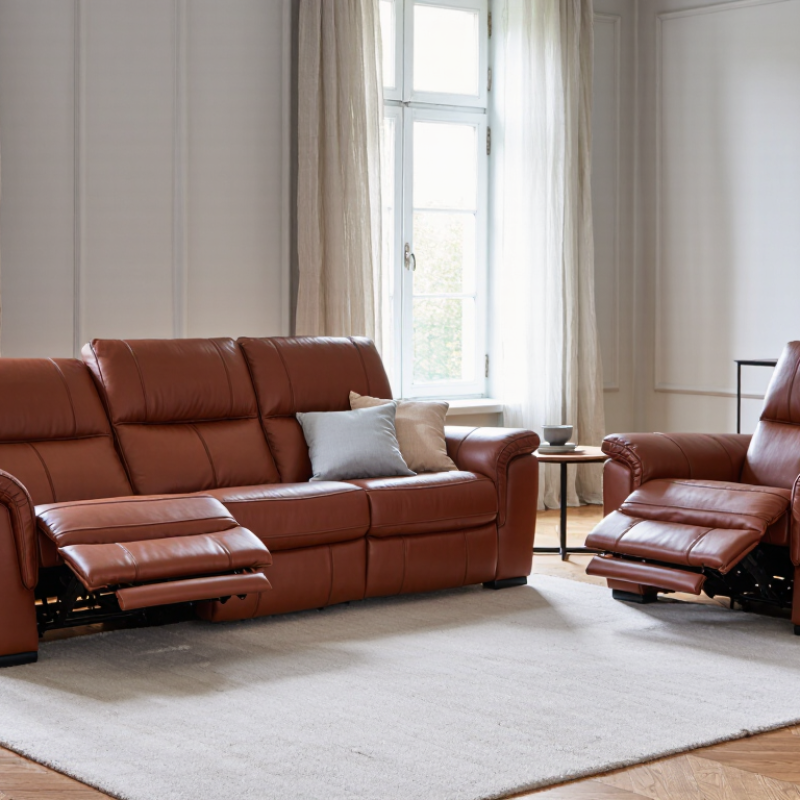
Leather recliner sofa sets differ in seating layout, reclining mechanism, and room clearance. Common arrangements include a sofa with a matching loveseat, a three-piece set with a chair, or modular sections that can be rearranged. Manual models use a side lever; power models use buttons and need an outlet nearby. Wall-hugger designs move forward as they recline, but still require the maker’s stated clearance. Measure doorways, stair turns, and the full reclined footprint—not just the sofa’s width. Small details matter.
Grand View Research estimated the global furniture market at USD 652.4 billion in 2023. That figure covers furniture broadly, not recliner sets alone, so it offers market context rather than proof of demand for a particular configuration. For a compact living room, compare a loveseat-and-sofa set against a sectional; bulky arms and center consoles can consume useful seating space. For movie nights, a console may add cupholders and storage, though it can prevent close seating. Check whether each seat reclines independently, and confirm the upholstery and frame details in the product specifications. Measurements can still feel misleading on paper; marking the footprint with tape helps.
Evaluating Leather Quality, Construction, and Reclining Mechanisms
2026 Top Leather Recliner Sofa Sets Buying Guide
Evaluating Leather Quality, Construction, and Reclining Mechanisms
Leather can feel smooth, pebbled, or slightly uneven, and those differences affect both appearance and upkeep. Ask whether the seating surfaces use full-grain, top-grain, or corrected leather, and which areas use matching materials. Product descriptions can be vague, so request a material breakdown. Feel the surface. A sample should feel supple, not plasticky, and its color may vary slightly across natural hide.
Look closely at seams, cushion edges, and the frame beneath the upholstery. Even stitching and firmly attached panels are useful signs, but they cannot prove how a sofa will perform over time. Sit in each seat and test the recliner with your weight in place. The footrest should extend smoothly, while the back should move without abrupt catching or loud knocks. Check the space needed behind the sofa, too; some wall-hugging designs still require room for the footrest.
Tips: Ask about the mechanism’s warranty and whether parts can be serviced. Try the controls several times, including when the seat is fully reclined. A showroom test is helpful, though it cannot recreate years of use. I would not choose by leather label alone; comfort and construction deserve equal attention.
Measuring Your Space and Choosing the Right Sofa Layout
2026 Top Leather Recliner Sofa Sets Buying Guide: Measuring Your Space and Choosing the Right Sofa Layout
Measure the room before comparing leather recliner sets. Record wall lengths, doorway widths, window positions, and the path from the entrance. Include baseboards and door swings; they can steal space unexpectedly. Small rooms punish guesswork. The National Association of Home Builders’ analysis of U.S. Census data puts the median new single-family home at 2,286 square feet in 2023. That whole-house figure cannot predict your living-room size, so measure your own space.
Sketch the room and mark a clear walking route before placing the sofa. For a reclining set, check each model’s fully extended depth and required wall clearance; mechanisms vary. Measure the delivery route too, including tight turns and stair landings. A large corner sofa may look efficient on paper, yet block a window or make the room feel crowded. I’d reassess the layout after taping its footprint on the floor. It is a small step, but easy to skip.
Tips: Use painter’s tape to mark the sofa, recliner extension, and side tables. Leave a comfortable path, then test the taped layout by walking through it.
Comparing Comfort, Features, Warranty, and Price
A leather recliner set may look comfortable in a showroom, but test it with your usual sitting posture. Check whether your feet rest naturally and whether the headrest supports you when fully reclined. Stay seated for several minutes. Small pressure points can become obvious.
Compare manual and powered features by using them, not just reading the labels. Listen for grinding or uneven movement, and check that controls are easy to reach. Measure the room, including the space behind each sofa when it reclines. A feature-rich set can feel cramped if the layout is wrong. It is easy to overlook that detail.
Read warranty terms closely. Coverage may differ for the frame, reclining mechanism, leather, and labor, while routine wear or accidental damage may be excluded. Ask for the written terms before purchase. For price comparisons, include delivery, assembly, and any care products you expect to use. Leather type and finish affect appearance and upkeep, but a higher price alone does not guarantee better comfort. Compare stitching, cushion support, and the feel of the upholstery in person; even a careful checklist cannot predict exactly how a sofa will soften over time.
2026 Top Leather Recliner Sofa Sets Buying Guide
Compare indicative U.S. retail budget ranges for leather reclining sofa sets by price tier.
How to compare your options
These broad planning ranges are estimates, not verified market averages; prices vary with set size, leather coverage, reclining mechanism, and retailer. For comfort, test seat depth and lumbar support. Compare manual versus power reclining, headrests, and other features, then check the warranty separately for upholstery, frame, reclining mechanism, and electronics.
Inspecting and Caring for a Leather Recliner Sofa Set
Before buying a leather recliner sofa set, inspect it in the position you will use every day. Sit in each seat and extend the footrest fully. It should move smoothly, without scraping or sudden jolts. Check the frame for wobbling, and listen for loose parts. Small sounds matter.
Look closely at the leather under bright, indirect light. Natural grain may vary across cushions, while deep cracks, sticky patches, or peeling edges can signal wear. Ask what type of leather covers each surface; some sets use different materials on hidden sides. Check seams, cushion joins, and areas touched by hands. It is easy to miss.
For routine care, dust with a soft, dry cloth and promptly blot spills with a clean, absorbent one. Do not rub. Use only cleaners and conditioners approved for the specific leather finish, after testing a hidden spot. Keep the sofa away from direct sun, heaters, and damp walls, which can dry or discolor leather over time. Vacuum crumbs from creases with a soft brush attachment. Check hinges and moving parts periodically, following the care instructions rather than adding oil on guesswork. Honestly, even careful upkeep cannot prevent every mark; a sofa is meant to be used, not kept untouched.
| Category | What to Inspect | Practical Buying or Care Guidance | Useful Checkpoint |
|---|---|---|---|
| Room and delivery fit | Sofa width, depth, height, doorway and hallway clearances, and the fully reclined footprint. | Measure the intended room and delivery route before ordering. Compare the sofa's open-position dimensions and required wall clearance with the product specifications. | Record room, doorway, stairway, and open-position measurements; do not assume all recliners need the same wall clearance. |
| Leather description | The stated leather type and which sofa surfaces are covered in leather. | Ask for an upholstery-material breakdown. Some products use leather on seating surfaces and a different upholstery material on sides or backs; descriptions and terminology can vary. | Check the product specification or material label rather than relying on a general “leather” description. |
| Leather finish | Whether the leather is aniline, semi-aniline, pigmented, or another specified finish. | Finishes differ in appearance and resistance to marks or fading. Confirm the care instructions for the exact finish; do not assume one leather-care product suits every finish. | Request written cleaning and conditioning guidance from the seller or manufacturer. |
| Seats and comfort | Seat width, seat depth, back support, cushion feel, and whether each intended user can sit comfortably. | Test the sofa in both upright and reclined positions when possible. Check the stated seating capacity and weight limits in the product documentation. | There is no single seat size or weight limit suitable for every user; verify the specifications for the exact model. |
| Reclining mechanism | Smooth operation, stable frame, footrest movement, unusual noise, and secure locking or stopping behavior. | Operate every seat through its full range. Keep fingers, pets, and objects clear of moving joints and follow the product's operating instructions. | Stop using a seat if its mechanism binds, shifts unexpectedly, or makes a new persistent noise; consult the service instructions. |
| Power recliner components | Power supply, controls, cable condition, outlet location, and any stated battery or electrical requirements. | Route cables away from moving parts and walkways. Follow the manual for installation and disconnect power as directed before cleaning or servicing electrical components. | Check the model-specific voltage, adapter, and safety instructions; do not use damaged cables or adapters. |
| Seams and upholstery | Stitching, seams, panels, surface finish, and signs of cuts, cracking, peeling, or uneven wear. | Inspect all visible sides and creases before acceptance. Photograph existing damage and report it promptly according to the seller's delivery or return policy. | Natural variation in color or grain may occur; confirm acceptable variation with the product description. |
| Routine dust and debris | Dust, crumbs, and debris in seams, seat gaps, and around the mechanism. | Dust with a clean, soft cloth. Use a vacuum's soft-brush attachment carefully in crevices, following the care instructions for the upholstery. | A regular light clean helps prevent loose debris from building up; frequency depends on use and household conditions. |
| Spills and marks | Fresh spills, residue, or a change in color or texture. | Blot a spill gently with a clean, dry, absorbent cloth; avoid rubbing. Use water or a cleaner only if the specific care instructions allow it. | Test any approved product on a concealed area first. Avoid household solvents, abrasive cleaners, and unapproved stain removers. |
| Sunlight and heat | Exposure to direct sunlight, radiators, fireplaces, heating vents, or other strong heat sources. | Position the sofa away from prolonged direct sun and strong heat where practical. These conditions can contribute to fading or drying of upholstery over time. | Review the room's light and heat exposure before choosing the sofa's location. |
| Conditioning products | Whether the leather's care instructions recommend a conditioner or other treatment. | Use only a product approved for the stated leather type and finish. Apply it as directed; unnecessary or unsuitable products may alter the appearance. | There is no universal conditioning interval. Follow the product instructions instead of applying conditioner on an assumed schedule. |
| Warranty and support | Coverage for upholstery, frame, reclining mechanism, power components, labor, and exclusions. | Read the written warranty and keep purchase records and care documentation. Confirm how to request service and whether maintenance or cleaning requirements apply. | Coverage periods and terms differ by product and component; verify them before purchase. |