Top 10 Biopsy Needles Reviewed for Precision and Efficiency
In the ever-evolving field of medical diagnostics, precision and efficiency are paramount, particularly in invasive procedures like biopsies. Among the critical tools used in these procedures are biopsy needles, which play a vital role in obtaining tissue samples for accurate diagnosis. The advancement of technology has led to the development of a variety of biopsy needles, each designed to enhance the accuracy and efficacy of the sampling process. This article aims to delve into the top 10 biopsy needles currently available, carefully reviewing their features, benefits, and performance.
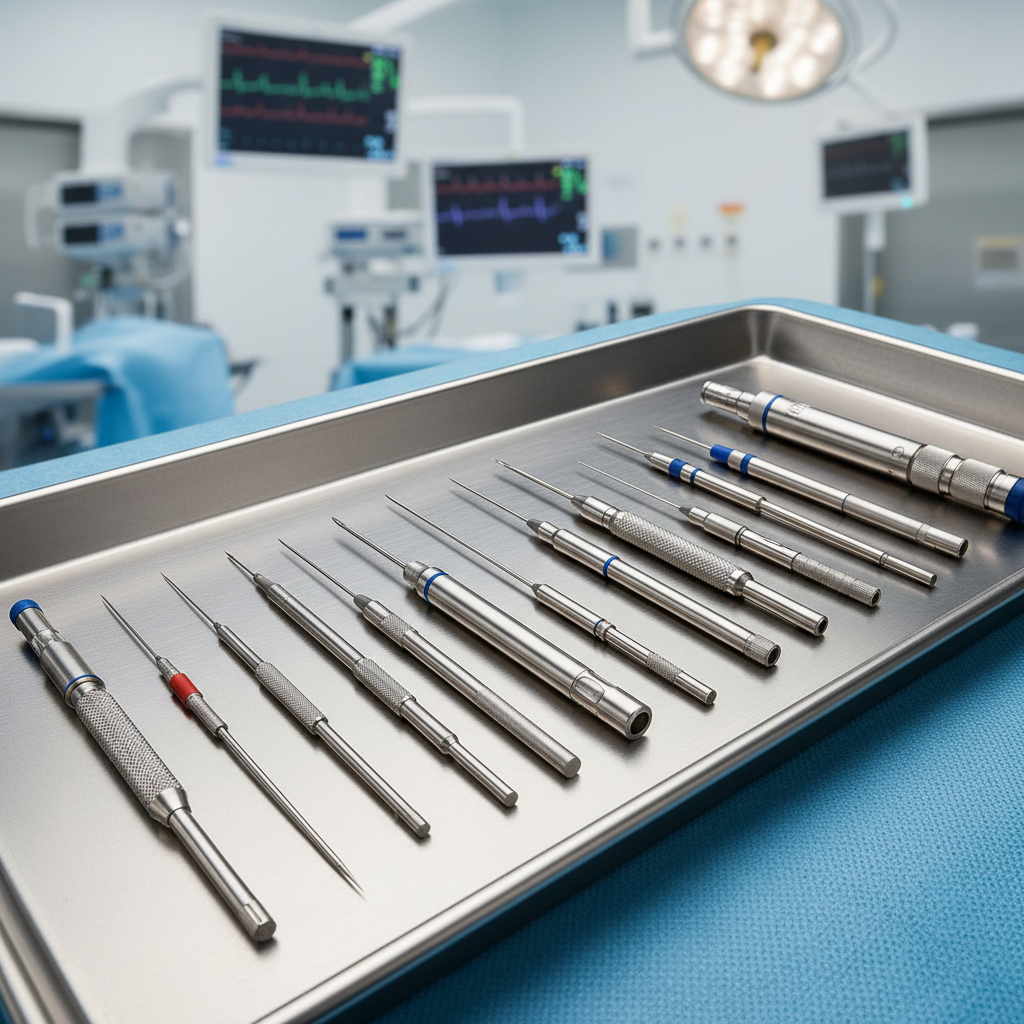
In selecting the best biopsy needles, factors such as needle gauge, design, and the specific application need to be considered. These elements can significantly influence the ease of use, patient comfort, and ultimately the quality of the specimen collected. Through this comprehensive review, healthcare professionals can gain valuable insights into the most effective biopsy needles tailored to meet diverse clinical needs, ensuring that they are equipped with the best possible tools in their diagnostic arsenal.
Join us as we explore the leading options in biopsy needles, highlighting the innovations that are making a difference in patient care and diagnostic accuracy.
Key Features to Consider in Biopsy Needles
When selecting biopsy needles, several key features significantly impact their precision and efficiency. One crucial factor is needle gauge, as it affects the balance between obtaining adequate tissue samples and minimizing patient discomfort. According to a study published in the "Journal of Medical Imaging and Radiation Oncology", thinner needles, such as those with a gauge of 22 or higher, can lead to reduced trauma while still providing sufficient tissue for accurate diagnosis. This suggests that healthcare professionals must consider the specific requirements of the biopsy procedure when choosing the appropriate gauge.
Another essential feature is the needle tip design. Cutting or bevel-tipped needles enable a cleaner tissue sample, thereby increasing diagnostic yield. Research from the "American Journal of Roentgenology" indicates that the use of a core biopsy needle with a modified tip design can enhance sample quality by up to 40%. Additionally, needle length can influence accessibility to deeper tissues and lesions; a study by the "British Journal of Surgery" found that longer needles are often required for certain procedures, such as deep-seated tumors, ensuring that clinicians can reach the target with precision. Understanding these critical features enables practitioners to select the best biopsy needle for improved patient outcomes.
Comparative Analysis of Needle Types for Different Biopsy Procedures
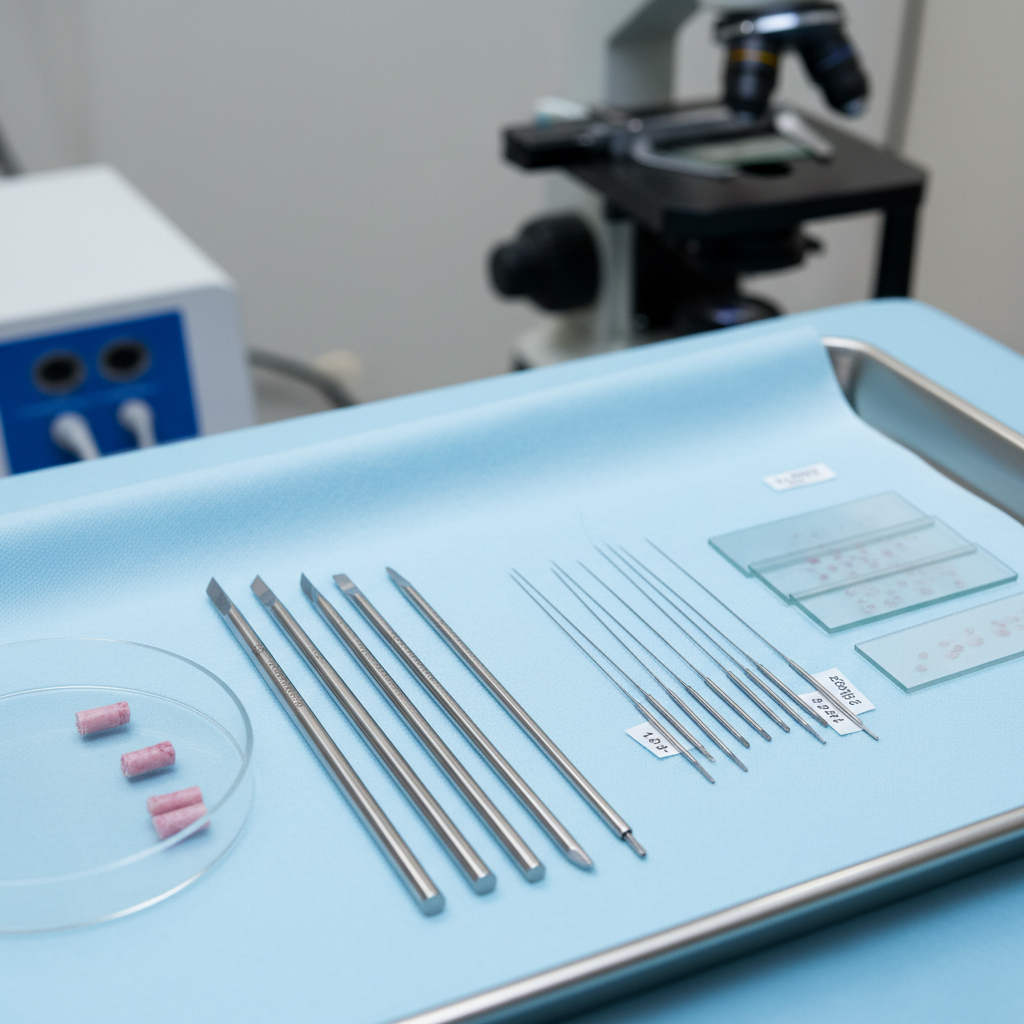
When selecting the appropriate biopsy needle, understanding the comparative analysis of needle types for different biopsy procedures is essential for ensuring precision and efficiency in diagnostics. Various studies indicate that the type of needle utilized can significantly affect the quality of tissue samples obtained. According to the American Academy of Family Physicians, a 14-gauge needle is recommended for core needle biopsies due to its ability to capture larger samples, which enhances diagnostic accuracy. In contrast, thinner needles, such as 22-gauge, are often used in fine needle aspirations, where minimizing invasiveness is a priority.
Tip: When choosing a biopsy needle, consider the target tissue's nature and the likelihood of complications. For soft tissues, including lymph nodes and breast tissue, a spring-loaded needle can improve precision and reduce the risk of damage.
Additionally, recent reports highlight the importance of needle design in minimizing trauma and enhancing sample retrieval efficiency. For instance, a study published in the Journal of Clinical Oncology emphasizes that “interface needles” designed with an advanced tip allow for better penetration through denser tissues, resulting in higher diagnostic yield. This comparison reveals that investing in technology and innovative needle design can lead to a significant improvement in patient outcomes.
Tip: Always consult with a specialized radiologist or healthcare professional to ensure that the selected needle type aligns with the specific biopsy procedure and patient condition for optimal results.
Efficiency and Precision: Evaluating Needles for Tissue Sampling
When it comes to tissue sampling, the choice of biopsy needle can significantly influence both the precision of the sample and the efficiency of the procedure. A well-designed needle allows for accurate targeting of lesions and minimizes trauma to surrounding tissues. Factors such as needle gauge, length, and tip design play a crucial role in determining the quality of the biopsy. For instance, finer gauge needles may reduce discomfort and improve cosmetic outcomes, while thicker needles can provide larger samples that yield more diagnostic information.
**Tips:** Always consider the specific requirements of the procedure when selecting a needle. Understanding the location and size of the lesion can guide the choice, ensuring that the needle's characteristics align with the biopsy goals. Additionally, it's essential to maintain an aseptic technique throughout the procedure to prevent infection and complications.
The effectiveness of a biopsy needle is also influenced by the practitioner's experience and technique. Utilizing a needle with a sharp cutting edge can facilitate smoother insertion, leading to faster sampling times. Furthermore, practicing proper handling and insertion techniques can greatly improve outcomes. By continually refining these skills and choosing the right tools, healthcare providers can significantly enhance the precision and efficiency of tissue sampling procedures.
Top 10 Biopsy Needles Reviewed for Precision and Efficiency
| Needle Type |
Gauge Size |
Length (cm) |
Sampling Efficiency |
Precision Rating |
| Core Biopsy Needle |
14 |
10 |
High |
4.8/5 |
| Fine Needle Aspiration |
23 |
8 |
Moderate |
4.5/5 |
| Automated Core Needle |
16 |
10 |
Very High |
4.9/5 |
| Tru-Cut Needle |
18 |
12 |
High |
4.7/5 |
| Biopsy Punch Needle |
8 |
5 |
Low |
4.2/5 |
| aspiration Needle |
21 |
7 |
Moderate |
4.3/5 |
| Baker's Biopsy Needle |
20 |
9 |
High |
4.6/5 |
| Chiba Needle |
22 |
10 |
Very High |
4.9/5 |
| Needle for Bone Biopsy |
15 |
10 |
High |
4.7/5 |
| Liver Biopsy Needle |
14 |
15 |
Very High |
4.8/5 |
User Experiences: Reviews and Feedback on Biopsy Needle Performance
User experiences are critical in evaluating the performance of biopsy needles, as they provide real-world insights into efficiency and precision. Many users report that the design and ergonomics of a needle can significantly affect their comfort and the overall success of the procedure. For instance, needles with a superior grip and a lightweight design often result in less fatigue during prolonged usage, allowing healthcare professionals to maintain precision throughout the sampling process.
Feedback from radiologists highlights that certain needle models with advanced cutting edges facilitate smoother tissue penetration, reducing the need for multiple attempts and, ultimately, minimizing patient discomfort.
Furthermore, the feedback on needle gauge is telling. Users have expressed that while larger gauges may increase the likelihood of obtaining a sufficient tissue sample, they can also lead to more significant tissue trauma. Conversely, finer needles allow for better patient tolerance but may compromise sample integrity in some scenarios. The consensus among medical practitioners is that the choice of biopsy needle should be dictated not just by the intended procedure but also by the specific patient condition and anatomical considerations present during the biopsy. Overall, the performance reviews reveal that user experiences are vital for guiding other professionals in selecting the most effective biopsy needles for various clinical situations.
Safety Considerations in Biopsy Needle Selection and Usage
When selecting biopsy needles, safety considerations are paramount. According to a report by the American Society of Clinical Oncology, complications from biopsy procedures can range from minor discomfort to severe complications such as infection or hemorrhage, occurring in approximately 1-3% of cases. Understanding the risks associated with different needle types is essential for minimizing these issues. For instance, automated core biopsy needles are often designed with safety features that reduce the likelihood of accidental injury to surrounding tissues, aligning with standards set forth by the National Comprehensive Cancer Network.
Additionally, the choice of needle gauge can impact not only safety but also the quality of the tissue sample obtained. Research published in the Journal of Vascular and Interventional Radiology indicates that larger gauge needles typically yield higher quality specimens with fewer complications. Implementing appropriate techniques such as ultrasound guidance can further enhance safety and precision, as noted in findings from the Radiological Society of North America.
By prioritizing these safety considerations, healthcare professionals can significantly improve patient outcomes and ensure that biopsy procedures are performed with the utmost care.