Best Hemostatic Pads Supplier in China for Global Buyers
For global buyers, choosing a hemostatic pads supplier in China is not just a price comparison. It is a decision about product consistency, documentation, and dependable communication. A sample may look clean on a desk, yet procurement teams also need to examine its packaging, material specifications, batch records, and instructions for use. Small details matter. A sealed pouch, a readable lot number, and a clear product specification can make supplier evaluation more practical.
Trauma-care expert Dr. Frank Butler is known for his work on bleeding-control practices, but a verified, topic-specific quotation from him was not provided for this introduction. It would be misleading to invent one. A useful buyer’s reminder is: “Verify the evidence behind every product claim.” That is an editorial line, not a quotation attributed to Dr. Butler. Buyers should request current technical documents and confirm that claims match the intended product and use. They should also ask how the supplier handles quality checks, complaints, and changes to materials or packaging. These conversations can reveal gaps that a polished catalogue may hide.
This guide examines how global buyers can compare Chinese hemostatic pads suppliers with care. It focuses on practical checks, not grand promises. No supplier is perfect. Clear evidence, candid answers, and consistent records offer a stronger basis for trust.
Definition and Clinical Role of Hemostatic Pads in Bleeding Control
Best Hemostatic Pads Supplier in China for Global Buyers
Definition and Clinical Role of Hemostatic Pads in Bleeding Control
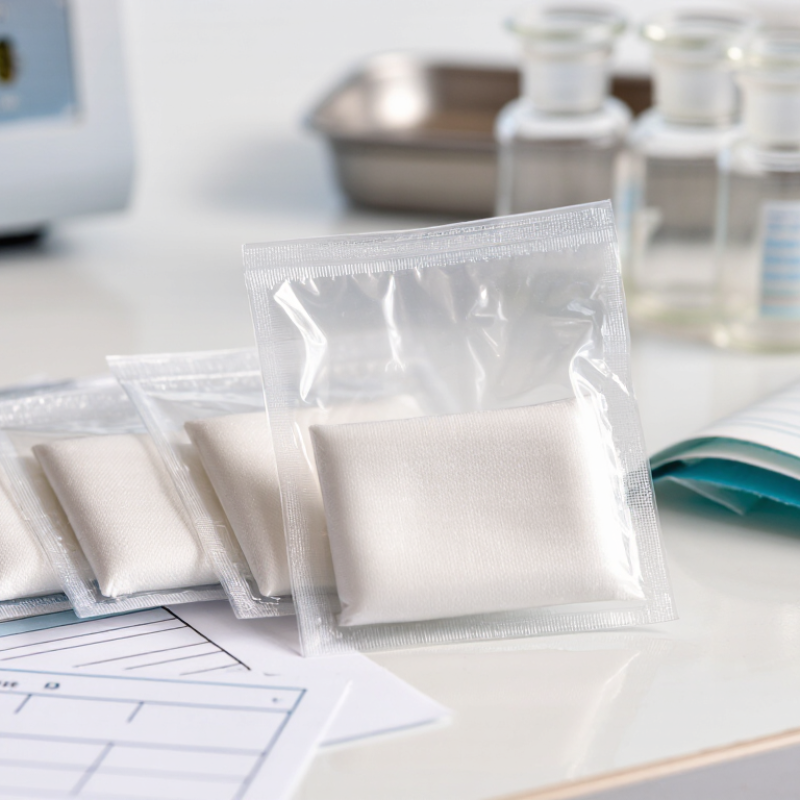
A hemostatic pad is a wound dressing designed to help control bleeding at the site of an injury. It may absorb blood, support clot formation, or work with direct pressure, depending on its material and design. Ordinary gauze mainly absorbs fluid and protects the wound. A hemostatic pad has a more specific role. It is not a substitute for medical assessment or emergency care.
In clinical settings, these pads can support bleeding control when used according to product instructions and local care protocols. A responder may apply the pad to the bleeding area and maintain pressure as directed. The right choice depends on the wound, the patient, and the product’s intended use. Details matter. Packaging, instructions, and material integrity should be checked before use. The term “hemostatic” can sound simple, but products do not all perform in the same way.
Tips: Buyers should review the pad’s intended use, material description, and clear application instructions. Ask suppliers for consistent product documentation and storage guidance. A small detail, such as a damaged seal, can affect confidence in the product. Verification takes time, but it is worth doing.
Key Hemostatic Materials: Chitosan, Kaolin, and Oxidized Cellulose
Best Hemostatic Pads Supplier in China for Global Buyers
Key Hemostatic Materials: Chitosan, Kaolin, and Oxidized Cellulose
Choosing a hemostatic pad starts with its material, not its sales claims. Chitosan carries a positive charge that can help blood components adhere at the wound surface. Kaolin supports clotting by activating the contact pathway. Oxidized cellulose absorbs blood and creates a local matrix that can support clot formation. These mechanisms differ, so one material is not automatically best for every bleeding scenario.
The World Health Organization’s Global Status Report on Road Safety 2023 estimates 1.19 million road deaths annually. This figure is not a measure of bleeding cases or pad demand, but it shows why dependable emergency supplies matter. For global buyers sourcing from China, request test data for absorption, tensile strength, sterility, and packaging integrity. Check that evidence applies to the finished pad, not only its raw material. Small details matter.
A neat laboratory result can still mislead. Wound conditions vary, and comparative evidence may not reflect every real-world use. Ask suppliers how they control material consistency between production lots, and review documented performance claims carefully. Clear answers are more useful than broad promises.
Key Hemostatic Materials and Their Primary Mechanisms
A mechanism map of chitosan, kaolin, and oxidized cellulose commonly used in hemostatic products.
Each equal-length bar marks one material’s commonly described primary mechanism; it does not indicate comparative speed, effectiveness, or clinical performance. Chitosan supports blood-cell interaction and aggregation, kaolin activates the intrinsic coagulation pathway, and oxidized cellulose provides a local matrix that supports clot formation.
Product Safety Testing: ISO 10993-5 Uses 70% Cell Viability as a Key Threshold
For global buyers comparing hemostatic pad suppliers in China, cytotoxicity data deserves close attention. ISO 10993-5:2009 treats a viability reduction greater than 30% against the control as a cytotoxic effect. In practical terms, cell viability below 70% is a warning threshold. A result at or above 70% is not, by itself, proof that a finished pad is safe for every use.
Test details matter. ISO 10993-12:2021 covers sample preparation and extraction conditions, which can affect the result. Ask whether the laboratory tested the finished pad, its extract, or only a raw material. Check the cell line, exposure period, controls, and report date. For example, a pad’s absorbent layer may behave differently from its adhesive or packaging residue. Small details count.
Look for full reports, not just a “pass” statement. Confirm that the tested formulation matches the product offered, and ask how changes in materials are reviewed. Results can vary. A supplier may provide a clean 70%-plus figure, yet unclear extraction methods leave room for doubt. That is worth questioning. These checks help buyers judge evidence more carefully, but they do not replace a product-specific biological evaluation.
Supplier Quality Checks: ISO 13485:2016, Sterilization, and Lot Traceability
For global buyers, a hemostatic pad is only as dependable as its production controls. When evaluating a China-based supplier, check whether its ISO 13485:2016 certificate covers the actual manufacturing site and product scope. A certificate alone does not prove every batch is consistent. Small details matter.
During a quality review, compare incoming-material records with the finished pad’s lot number. Request the documented sterilization method, cycle parameters, validation status, and routine monitoring results. Check that the release record links the sterilization load to the production lot. Inspect sample cartons for intact seals, clear labels, and signs of moisture or damage. Sterile does not mean invulnerable.
Lot traceability should work in both directions: from a carton label back to materials, production date, and release checks, and from a material lot forward to affected shipments. Ask for a mock trace exercise and note response time or missing records. Review change controls for absorbent materials, pad dimensions, and packaging. Neat paperwork can still hide gaps, so compare records with physical samples and a recent batch file. No audit catches everything, and that is worth admitting. Clear evidence is more useful than confident wording.
Global Market Access: EU MDR 2017/745 and U.S. 21 CFR Part 801
Global market access for hemostatic pads begins with a clear intended use and consistent product records. Under EU MDR 2017/745, the applicable device classification shapes conformity assessment, technical documentation, clinical evaluation, and post-market duties. Requirements depend on the product and its claims. A supplier can provide traceable specifications, material details, test reports, and manufacturing records, but the legal manufacturer remains responsible for conformity.
Details matter. Check that the carton, sterile barrier, and instructions for use identify the same product and intended purpose. For EU markets, labeling and instructions may need to meet language rules in each destination country. U.S. labeling falls under 21 CFR Part 801, with applicable details depending on the device and its use. Buyers should review the label, packaging, and accompanying information together, including lot identification, expiration date, and sterile status where applicable. FDA registration or listing alone does not mean FDA approval. A tidy document folder is not enough. Small inconsistencies can delay review, and suppliers should flag gaps rather than promise universal acceptance. Have qualified regulatory professionals verify requirements for each target market before shipment.
Best Hemostatic Pads Supplier in China for Global Buyers - Global Market Access: EU MDR 2017/745 and U.S. 21 CFR Part 801
Buyer due-diligence checklist for evaluating hemostatic pad manufacturers and market-access documentation. Regulatory requirements depend on the device’s intended purpose, design, and claims.
| Evaluation area | European Union — MDR (EU) 2017/745 | United States — FDA requirements | Evidence global buyers should request |
|---|---|---|---|
| Regulatory status | Confirm the applicable device classification and conformity-assessment route under the MDR. Classification depends on intended purpose, contact with injured skin, and device characteristics. | Confirm the product’s FDA regulatory pathway and applicable device requirements. FDA establishment registration or device listing alone does not mean that FDA has approved or cleared a device. | Intended-use statement, regulatory classification rationale, relevant authorization or conformity documents, and a clear explanation of which legal manufacturer is responsible for the product. |
| EU classification and conformity | MDR Annex VIII Rule 4 may be relevant to devices in contact with injured skin. The class depends on the device’s intended use; the manufacturer should document its rationale. Notified Body involvement depends on the classification and applicable conformity-assessment route. | There is no direct one-to-one mapping between an EU device class and a U.S. device class. Determine U.S. requirements separately using the product’s intended use and FDA classification resources. | EU classification rationale, applicable conformity-assessment route, and—where required—Notified Body certificate details and scope. Check that the product and manufacturer are within the stated scope. |
| EU technical documentation | The manufacturer must maintain technical documentation and demonstrate conformity with applicable MDR requirements. A declaration of conformity and CE marking are relevant where the device has completed the applicable conformity-assessment process. | U.S. labeling and market-entry obligations are separate from EU technical documentation and CE marking. | Current EU Declaration of Conformity, product identification, intended purpose, applicable standards or common specifications, and a summary of supporting safety and performance evidence. |
| EU representative and supply chain | A manufacturer established outside the EU generally must designate an EU authorized representative. Importers and distributors also have MDR obligations. | Identify the U.S. regulatory responsibilities of the manufacturer, importer, and any other relevant supply-chain parties. | For EU supply: authorized-representative details and importer information, where applicable. For U.S. supply: responsible establishment and importer details, as applicable. |
| U.S. labeling — 21 CFR Part 801 | EU labeling must meet applicable MDR requirements, including the information required for the device and its intended users. | 21 CFR Part 801 contains FDA labeling requirements. Label content must match the product’s intended use and comply with applicable requirements; specific provisions and exemptions can vary by device. | Review the proposed U.S. label and instructions for use, including device identification, intended use, warnings, directions, and required manufacturer or responsible-party information. |
| U.S. registration, listing, and UDI | EU MDR includes UDI requirements, subject to applicable rules and timelines. | FDA establishment registration and device listing are addressed separately in 21 CFR Part 807. UDI requirements are addressed in 21 CFR Part 830 and applicable labeling provisions, including 21 CFR 801.20; exemptions may apply. | Ask for the relevant FDA registration and listing information, device identifiers where applicable, and the basis for any claimed exemption. Verify information through appropriate official FDA resources. |
| Sterility and packaging claims | If supplied sterile, the manufacturer must support the sterile-device claims and meet applicable MDR requirements for sterile devices and packaging. | Labeling and applicable FDA requirements must support any sterile or single-use claims. Requirements depend on the device and its intended use. | Confirm whether the product is sterile or non-sterile; request applicable sterilization validation, packaging validation, shelf-life evidence, and clear storage and handling conditions. |
| Performance and safety evidence | The manufacturer must support conformity with applicable safety and performance requirements, including risks associated with the product’s intended purpose. | Evidence must support the product’s U.S. intended use and applicable regulatory pathway. Do not treat a supplier’s test summary as proof of FDA authorization. | Request product-specific test reports and a description of test methods, sample identification, acceptance criteria, and whether testing supports the exact material, design, and claims being offered. |
| Quality and change control | Check that the manufacturer can demonstrate controlled production and maintain the documentation required by applicable MDR obligations. | Check the manufacturer’s quality and regulatory responsibilities under applicable U.S. requirements. Requirements may depend on the establishment and device activity. | Review quality-system documentation, manufacturing-site details, traceability practices, complaint handling, and procedures for notifying buyers of changes to materials, manufacturing, or labeling. |
| Product specification and sourcing | Specifications and claims should be consistent with the device’s EU intended purpose and conformity documentation. | Specifications and claims should be consistent with the U.S. regulatory pathway and cleared or otherwise permitted intended use, where applicable. | Compare material composition, dimensions, packaging configuration, intended use, storage conditions, and lot traceability against the product documentation and purchase specification. |
Regulatory references are provided as a buyer-screening aid, not as a determination of device classification or market authorization. Verify current requirements and product-specific status with the relevant regulatory authorities or qualified regulatory professionals.
Related Posts
-
Essential Tips for Choosing a Luer Lock Stopcock?
-

What is an Aln Filter and How Does It Work in Modern Applications
-
2025 Top 5 Arrow Arterial Line Kits for Enhanced Patient Care and Safety
-

Top 10 Benefits of Using Arrow Arterial Line Kit for Hospitals?
-

Why Choose an Arrow Arterial Line Kit for Your Medical Needs?
-
What is a Coaxial Needle and How is it Used?