How to Choose the Right Bone Biopsy Needle for Accurate Diagnosis?
Choosing the right bone biopsy needle is crucial for obtaining accurate and reliable diagnostic results. Bone biopsies are essential procedures used to diagnose various conditions, including infections, tumors, and other bone disorders. The effectiveness of these biopsies heavily depends on the quality and appropriateness of the instruments used, particularly the bone biopsy needle. Different types of needles are available, each designed for specific applications, and understanding their characteristics can significantly impact the sampling outcome.
Various factors must be considered when selecting a bone biopsy needle, including the type of lesion, the location within the bone, and the patient's anatomy. A well-chosen needle can enhance the precision of tissue acquisition while minimizing complications and discomfort for the patient. Moreover, advances in technology have contributed to a wide range of options, making it essential for healthcare professionals to stay informed about the latest developments and recommendations in needle selection.
In this article, we will explore the key considerations for choosing the right bone biopsy needle, focusing on the characteristics of different types of needles, the techniques involved in the biopsy process, and how these factors align with achieving an accurate diagnosis. By understanding the nuances of bone biopsy needle selection, medical practitioners can improve patient outcomes and enhance the diagnostic process.

Understanding the Importance of Bone Biopsy in Diagnosis
Bone biopsy plays a crucial role in the accurate diagnosis of various bone conditions, including infections, tumors, and metabolic disorders. By obtaining a sample of bone tissue, healthcare professionals can analyze it for abnormalities that may not be detectable through imaging techniques alone. This procedure not only helps in determining the presence of malignancies but also aids in formulating effective treatment plans tailored to the specific pathology identified. The precision of a bone biopsy is directly linked to the selection of the biopsy needle used, as the right needle can significantly enhance the quality of the sample obtained.
Understanding the importance of bone biopsy in diagnosis involves recognizing its potential impact on patient outcomes. A well-executed biopsy can lead to early intervention and improved prognoses for patients. Moreover, accurate diagnoses derived from bone biopsies can sometimes prevent unnecessary surgeries or prolonged periods of uncertainty regarding a patient's condition. Thus, choosing the right biopsy needle is essential, as it ensures optimal penetration and tissue sampling from the targeted site, ultimately contributing to more reliable and actionable diagnostic information.
Types of Bone Biopsy Needles and Their Applications
When selecting a bone biopsy needle, understanding the various types available and their specific applications is crucial for achieving an accurate diagnosis. Generally, bone biopsy needles are categorized into two main types: core biopsy needles and aspiration needles. Core biopsy needles, often equipped with a hollow design, are used to extract a solid core of bone tissue, making them ideal for diagnosing bone tumors or infections. On the other hand, aspiration needles are thinner and designed for obtaining fluid samples, which can help diagnose conditions such as osteomyelitis.
Tips for choosing the right needle include considering the diameter and length of the needle based on the site of the biopsy and the depth of the target tissue. A larger diameter may yield a more substantial sample, but it can also increase the risk of complications. Additionally, the choice of needle should align with the imaging guidance technique used—ultrasound, CT, or fluoroscopy—to ensure precision during the procedure.
Another important consideration is the healthcare provider's experience with specific needles. Different instruments may have varying learning curves or may perform better in certain anatomical locations. It’s beneficial to discuss options with a medical professional who can provide personalized recommendations based on the patient's specific circumstances and needs. By understanding the types of bone biopsy needles and their applications, healthcare providers can enhance diagnostic accuracy and patient outcomes.
Bone Biopsy Needle Types and Their Applications
Factors to Consider When Choosing a Biopsy Needle
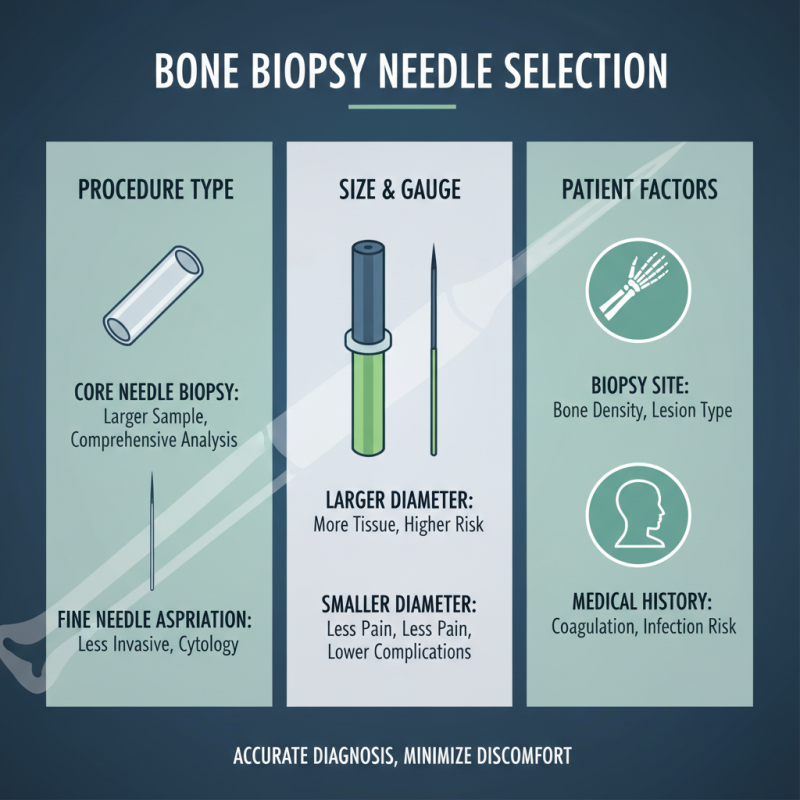
When selecting a bone biopsy needle, various factors must be considered to ensure accurate diagnosis and minimize patient discomfort. First and foremost, the type of biopsy procedure—whether it is a core needle biopsy or a fine needle aspiration—will significantly influence the choice of needle. Core needles, which provide larger tissue samples, can be essential when a more comprehensive analysis is needed, while fine needles may suffice for less invasive procedures. The size and gauge of the needle also play a crucial role, as larger diameters can yield more substantial samples but may lead to increased pain or complications.
Another critical factor is the anatomical location of the biopsy. Different bones may require tailored approaches, as the thickness of the overlying tissue and the bone density can affect needle penetration. Additionally, the experience and skill of the practitioner using the needle are paramount; the right tool can produce vastly different results depending on the operator. Furthermore, considering the patient’s overall health, including any underlying conditions or medications that affect clotting, is vital to ensure safety and efficacy during the biopsy procedure. By carefully weighing these factors, clinicians can make informed decisions that lead to accurate diagnoses while ensuring patient comfort and safety.
Guidelines for Proper Needle Insertion Techniques
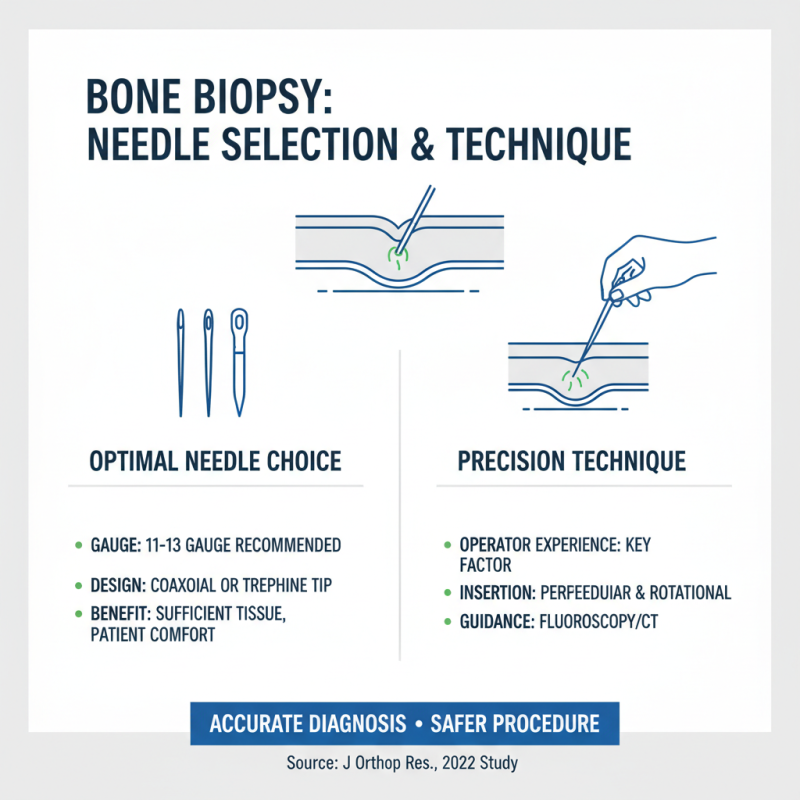
When performing a bone biopsy, selecting the appropriate needle and ensuring proper insertion techniques are pivotal for accurate diagnosis. According to a 2022 study published in the Journal of Orthopedic Research, the success rate of biopsy procedures can be directly influenced by the choice of needle gauge and design, as well as the operator’s experience in using these instruments. Typically, a higher gauge needle (e.g., 11 or 13 gauge) is recommended for obtaining sufficient tissue samples while balancing patient comfort and procedural safety.
Proper needle insertion techniques significantly impact the quality of tissue samples obtained. The insertion site should be meticulously chosen based on imaging studies, and the needle should be advanced smoothly to minimize trauma. A recent clinical guideline emphasizes the importance of using a coaxial system to enhance efficiency and reduce complications. Additionally, maintaining a perpendicular angle to the bone surface during insertion can help ensure that the needle reaches the desired depth with minimal resistance.
Tips for a successful procedure include:
1. Always perform a pre-procedure imaging study to identify the optimal insertion site and anatomy.
2. Use aseptic techniques before the procedure to prevent infection, with special attention to the surrounding skin and surgical instruments.
3. Practice patience and steadiness during needle insertion, as abrupt movements can complicate the retrieval of an adequate biopsy sample.
By adhering to these guidelines and employing the right tools and techniques, healthcare professionals can significantly improve the accuracy of bone biopsies, leading to better patient outcomes.
Post-Biopsy Care and Follow-Up Procedures
Post-biopsy care is crucial for ensuring a smooth recovery and accurate diagnosis following a bone biopsy procedure. After the biopsy, patients should rest and avoid strenuous activities for at least 24 hours to minimize the risk of complications such as bleeding or infection. The biopsy site may be sore or bruised, so applying an ice pack can help reduce swelling and discomfort. It's also important to keep the biopsy area clean and dry, following the healthcare provider's specific instructions on wound care, which may include changing dressings or observing for any signs of infection such as increased redness, warmth, or discharge.
Follow-up procedures play a significant role in the overall diagnostic process. Patients should schedule a follow-up appointment with their healthcare provider to discuss the results of the biopsy, which usually takes about a week to process. These consultations are essential not only to review the findings but also to plan further action if needed, such as additional imaging or treatment options. Patients are encouraged to communicate any new or worsening symptoms during this time, as it can provide valuable information for ongoing care. Maintaining an open dialogue with healthcare professionals enhances patient understanding and support throughout the diagnostic journey.
How to Choose the Right Bone Biopsy Needle for Accurate Diagnosis? - Post-Biopsy Care and Follow-Up Procedures
| Needle Type |
Needle Gauge |
Usage |
Complications |
Post-Biopsy Care |
| Tru-Cut Needle |
14-18 gauge |
Solid mass biopsy |
Bleeding, infection |
Ice pack, rest for 24 hours |
| Aspiration Needle |
18-20 gauge |
Fluid collection |
Pneumothorax, pain |
Monitor for signs of complications |
| Core Needle |
16-20 gauge |
Tissue samples |
Injury to surrounding areas |
Keep the biopsy site clean, avoid strenuous activities |
| Jamshidi Needle |
11-14 gauge |
Bone marrow biopsy |
Fracture, nerve damage |
Pain management, hydration |