How to Choose the Best Hemostatic Pads for Your Needs?

Choosing the right hemostatic pads for your medical needs can feel overwhelming. Dr. Sarah Thompson, a recognized expert in emergency medicine, states, “Selecting the right hemostatic pad can save lives.” With various options available, understanding their unique features is crucial.

Hemostatic pads come in various materials and designs. Some promote rapid blood clotting, while others offer more prolonged support. Different situations demand specific types. For example, pads used in trauma care need to stop bleeding quickly and effectively. However, not every pad performs equally well in diverse scenarios.

Evaluating your needs is vital. This process goes beyond simple preference; it requires assessing your environment and intended use. While many products claim effectiveness, not all can back it up with evidence. Relying on expert recommendations and real-world experiences can guide your decision. The right choice of hemostatic pads can have a significant impact in urgent situations.
How to Choose the Best Hemostatic Pads for Your Needs?

Understanding Hemostatic Pads: What They Are and Their Importance

Hemostatic pads serve a critical role in controlling bleeding. These products are designed to promote blood clotting and stabilize injuries. They are crucial in first aid, surgical settings, and emergency response. Knowing their importance helps in making informed decisions about their use.

The composition of hemostatic pads often includes various materials, each with its unique properties. Some pads utilize natural substances to enhance clot formation. Others leverage advanced technology for faster absorption. Choosing the right type can vary based on the situation at hand. Understanding the context of the injury is essential.

While these pads are effective, they are not foolproof. Users sometimes underestimate the complexity of wound care. Not all injuries can be addressed with hemostatic pads alone. It’s vital to seek professional medical help when necessary. Balancing immediate response with subsequent care requires careful thought and evaluation.
Different Types of Hemostatic Pads: Pros and Cons for Each Type

How to Choose the Best Hemostatic Pads for Your Needs?

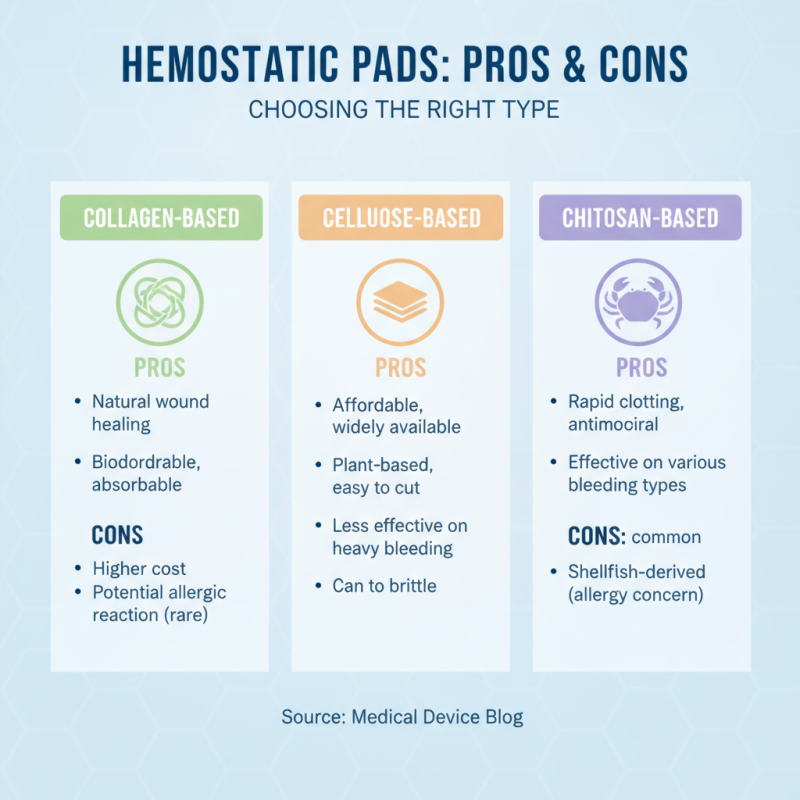
Choosing the right hemostatic pads can be daunting. Each type has its own unique features, advantages, and disadvantages. The most common types include collagen-based, cellulose-based, and chitosan-based pads.

Collagen-based pads are excellent for promoting natural blood clotting. They work quickly and effectively. However, they may not be suitable for deep wounds. On the other hand, cellulose-based pads are versatile and absorbent. They create a gel-like barrier over the wound. Yet, their effectiveness can diminish in very wet conditions.

Chitosan-based pads are notable for their ability to control bleeding in severe injuries. They are effective in multiple scenarios and are often used in emergency situations. Still, these pads can be tricky to apply correctly. Understanding these pros and cons is vital for making an informed choice. Making the right decision means weighing these factors carefully.

Key Factors to Consider When Selecting Hemostatic Pads

When selecting hemostatic pads, it’s crucial to evaluate several key factors. The primary consideration is the type of wound. Different pads are designed for specific injuries. A report from the Journal of Trauma indicated that certain pads excel in managing high-bleed situations, while others are more suited for minor cuts. Understanding the clinical indications for use is essential to ensure effectiveness in bleeding control.

Another factor is the pad's composition. Hemostatic pads can be made from various materials, including gauze, synthetic polymers, and hydrogels. Each type offers distinct benefits. For example, some materials promote rapid clot formation, while others provide a more extended surface area for absorption. The choice of material can significantly influence the recovery process. Research shows that the right pad can reduce healing time by up to 25%, showcasing the importance of selecting an appropriate option.

Additionally, consider the pad's application method. Some devices are designed for quick application, while others require more time and technique. Understanding your environment and skill level can guide the choice. Data suggests that 30% of users encounter difficulties with complex application processes. An effective pad should balance ease of use with performance. Evaluating these factors will allow for informed decisions tailored to specific needs, ultimately enhancing patient care.

Evaluating Quality and Effectiveness of Hemostatic Pads

When evaluating hemostatic pads, quality and effectiveness are paramount. Research shows that pads must meet specific standards to control bleeding efficiently. The American College of Surgeons notes that effective hemostatic agents can reduce mortality rates from trauma-related hemorrhages by up to 25%. This highlights the importance of proper selection in emergency situations.

Look for pads that utilize state-of-the-art materials. Some newer products use innovative polymers that enhance clotting. According to a recent study published in the Journal of Trauma, these materials can achieve hemostasis in under three minutes. However, it's crucial to consider that not all materials perform equally in varied environments. There can be variability in absorption rates based on context, such as temperature and humidity.

While many pads are readily available, reviews can be misleading. Real-world applications often reveal flaws not seen in controlled settings. You might find a product that claims rapid absorption, yet it fails under certain pressures or conditions. This discrepancy highlights the need for thorough testing and evaluation before relying on any specific hemostatic solution.

Pay attention to peer-reviewed studies and medical guidelines to make informed decisions.

Usage Guidelines and Best Practices for Hemostatic Pads

Hemostatic pads are essential tools for controlling bleeding. When choosing them, it’s crucial to know how to use them effectively. Proper usage can significantly affect outcomes in emergency situations. Familiarity with thickness, absorbency, and application techniques is vital. Each type of pad serves different needs. Understanding these differences will help in selecting the right one.

Start by cleaning the wound. Apply gentle pressure while placing the hemostatic pad directly over the source of bleeding. Ensure contact is firm but not excessive. Hold it in place, allowing the pad to absorb the blood. Observe the area regularly. If it continues to bleed, reassess the pad’s position. Sometimes, multiple pads may be necessary to control heavy bleeding.

Education on pad application is essential. Consider practicing with training pads to build confidence. Seek guidance from medical professionals when possible. Mistakes can happen, like applying the pad incorrectly or using the wrong type. Reflect on these experiences to improve your techniques. Mastery takes time, but your safety and that of others depends on it.