What is a Coaxial Needle and How is it Used?
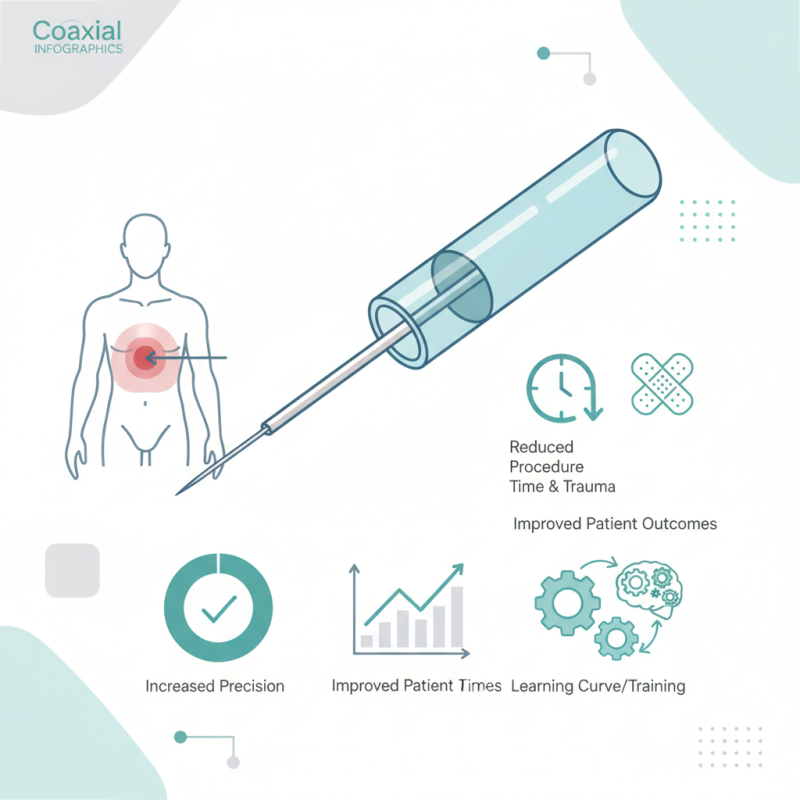
The coaxial needle represents a significant advancement in medical procedures, particularly in the realm of minimally invasive techniques. A report by the International Journal of Surgery indicates that the use of coaxial needles can enhance precision in various biopsies and injections, reducing patient trauma and recovery time. Dr. Emily Chen, a leading expert in interventional radiology, noted, “The coaxial needle allows clinicians to target tissues more accurately, minimizing complications.”
This device functions by enabling a larger outer cannula to guide a smaller inner needle, which improves targeting accuracy. As hospitals increasingly adopt this technology, they report reductions in procedure time and better patient outcomes. Despite these benefits, some practitioners still face challenges in mastering this technique. The learning curve associated with coaxial needle usage requires ongoing training and support.
The impact of the coaxial needle on medical practices is substantial. Increased adoption suggests a shift toward more sophisticated interventions, yet it's essential for medical professionals to address the gaps in proficiency. Continued education and hands-on practice are crucial for maximizing the advantages of this innovative tool.
What is a Coaxial Needle?
A coaxial needle is a specialized medical device often used for accessing different tissue layers. It consists of an inner needle surrounded by an outer needle. This design provides increased stability during procedures. The outer needle acts as a guide, guiding the inner needle into specific locations within the body.
This type of needle is commonly used in biopsies and injections. For instance, during a biopsy, the coaxial needle allows for multiple tissue samples to be collected using just one entry point. This can reduce patient discomfort and improve accuracy. However, not all practitioners may find it easy to master. The technique can be delicate and requires a gentle touch.
In practice, the use of a coaxial needle may not always yield perfect results. Variations in patient anatomy can complicate procedures. Additionally, some practitioners might struggle with maintaining the correct angle. This can lead to less than optimal tissue collection. Continuous learning and practice are essential for improving proficiency with this valuable tool.
What is a Coaxial Needle and How is it Used?
| Dimension | Description |
|---|---|
| Definition | A coaxial needle is a specialized type of needle designed for use in medical procedures that require precise access and sampling. |
| Components | Typically consists of an outer cannula and an inner stylet, allowing for easier penetration and withdrawal of samples. |
| Uses | Commonly used in biopsy procedures, anesthetic injections, and various minimally invasive surgeries. |
| Advantages | Provides greater accuracy, reduces tissue trauma, and allows for multiple sample retrieval without repositioning the needle. |
| Considerations | Requires skilled handling to avoid complications such as bleeding or infection. |
Components and Design of a Coaxial Needle
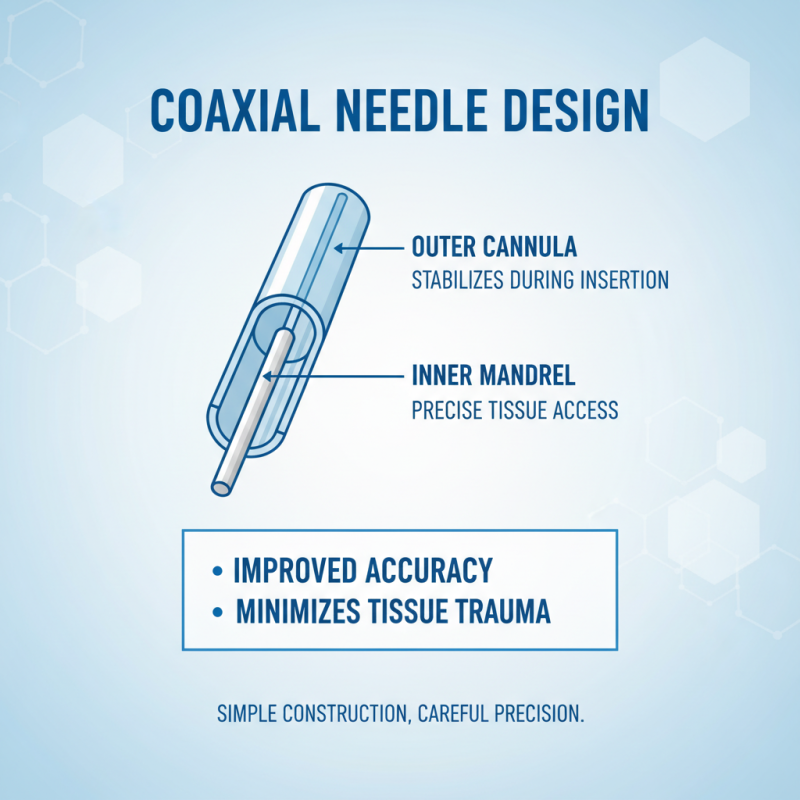
A coaxial needle features a unique design that enhances its utility in various medical procedures. Its structure consists of an outer cannula and an inner mandrel. The outer cannula stabilizes the needle during insertion. The inner mandrel allows for precise tissue access. This combination improves accuracy while minimizing tissue trauma. The total construction seems simple, yet it requires careful precision.
The needle's design facilitates better control during complex procedures. However, this sophistication can sometimes lead to user errors. Improper handling may result in unintended consequences. Moreover, the needle's dimensions must be chosen carefully. A poorly sized needle could compromise performance. In some situations, the user may need to adjust the angle of insertion. Such adjustments can be challenging under pressure.
In practical applications, the coaxial needle is common in biopsies and other diagnostic procedures. Its ability to provide a clear path for sampling is invaluable. Nevertheless, achieving the desired results depends heavily on the user's skill and experience. The need for ongoing training cannot be overstated. Users should seek continuous improvement to overcome the needle's inherent challenges. Proper practice can lead to enhanced outcomes and patient safety.
Common Medical Applications of Coaxial Needles
Coaxial needles are widely used in various medical fields. Their design allows for a unique method of collecting tissue samples. This versatility makes them valuable tools in diagnostics.
In the realm of biopsy procedures, coaxial needles excel. They reduce the need for multiple punctures, which minimizes patient discomfort. In oncology, these needles are used to obtain samples from tumors. Accurate sampling is crucial for effective treatment plans.
In pain management, coaxial needles facilitate precise injections. This ensures medications reach the targeted area efficiently. However, the technique requires skill and experience. Not all procedures yield the desired results. Learning the nuances of coaxial needles takes time. Continuous training is essential for healthcare providers to master this tool.
The Procedure: How to Use a Coaxial Needle
The use of coaxial needles is prevalent in various medical procedures. They provide a unique approach to accessing tissues while minimizing damage. Primarily, these needles consist of an outer needle and a thinner inner needle. The inner needle can be precisely inserted, while the coaxial design allows for easy adjustments. This structure is vital in procedures like biopsies or fine needle aspirations.
During the procedure, the outer needle is positioned first. It creates a pathway for the inner needle. This method reduces trauma to surrounding tissues. According to recent industry reports, the accuracy of coaxial needle placements has improved by nearly 30% compared to traditional techniques. Precision is crucial, especially in delicate areas. However, it requires considerable skill and training to minimize risks effectively.
While coaxial needles are beneficial, they are not without challenges. Practitioners must understand the anatomy and potential complications. Some studies suggest that about 15% of procedures may encounter difficulties. Learning curves can vary among different medical professionals. Although the coaxial technique shows promise, ongoing training is essential for enhancing efficacy and reducing errors. There’s always room for improvement in mastering this technique.
Usage of Coaxial Needles in Medical Procedures
Benefits and Limitations of Coaxial Needles in Medical Practice
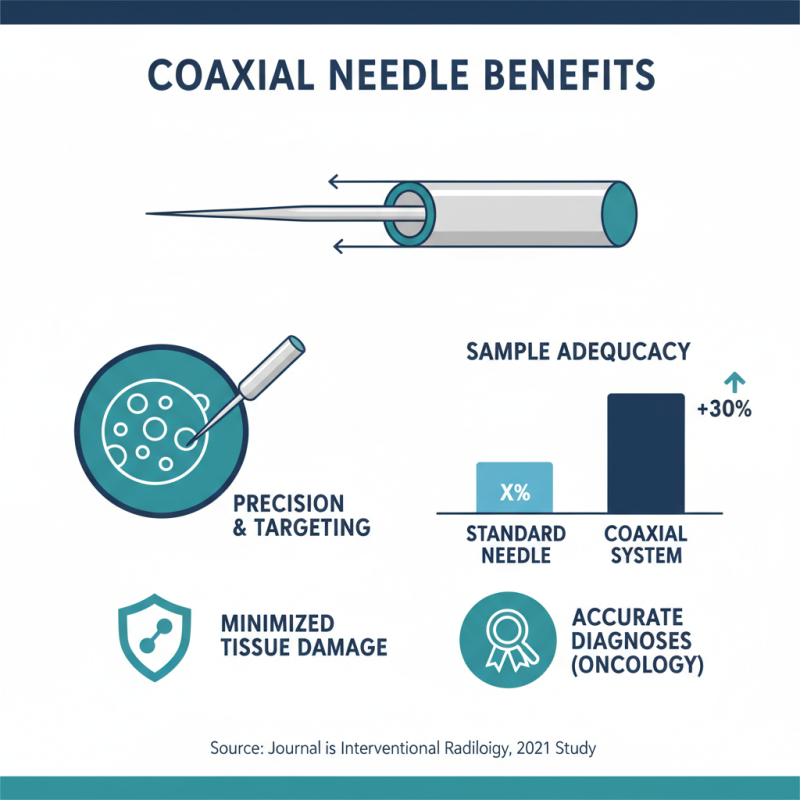
Coaxial needles offer unique benefits in medical procedures. They feature an inner needle surrounded by an outer needle. This design allows for precision and minimizes tissue damage during biopsies. According to a 2021 study published in the Journal of Interventional Radiology, coaxial systems increased sample adequacy by 30%. This improvement can lead to more accurate diagnoses, which is crucial in oncology.
However, coaxial needles also have limitations. They can be difficult to maneuver in challenging anatomical locations. In some cases, the outer sheath may obstruct access to certain tissues. A survey conducted among radiologists indicated that about 20% of respondents experienced complications with coaxial systems. This highlights the need for careful consideration when selecting tools for specific procedures. In addition, the cost of coaxial needle systems can be higher than standard needles, leading to budget concerns for some practices.
In the dynamic field of medicine, understanding both benefits and limitations is essential. Coaxial needles certainly enhance biopsy procedures. Still, their challenges remind healthcare professionals that no single solution fits all scenarios. Every patient's situation is unique, necessitating thorough evaluation before proceeding.
Related Posts
-
Essential Guide to Arrow Arterial Line Kits: What You Need to Know in 2025
-
10 Best Bone Marrow Needle Options for Efficient Biopsy Procedure?
-

Understanding the Science Behind Luer Lock Stopcocks: Essential Guide for Medical Professionals
-
2025 Top Hemostatic Pads for Effective Wound Management and Rapid Healing
-
What is IVC Removal and How Does it Work?
-
How to Choose the Best Hydrophilic Coating Catheter for Your Needs