10 Essential Tips for IVC Filter Retrieval Success
IVC filter retrieval is a crucial procedure in managing patients who have received an inferior vena cava filter. These filters, while lifesaving, can lead to complications if not removed properly. Understanding the retrieval process can significantly impact patient outcomes and reduce risks.
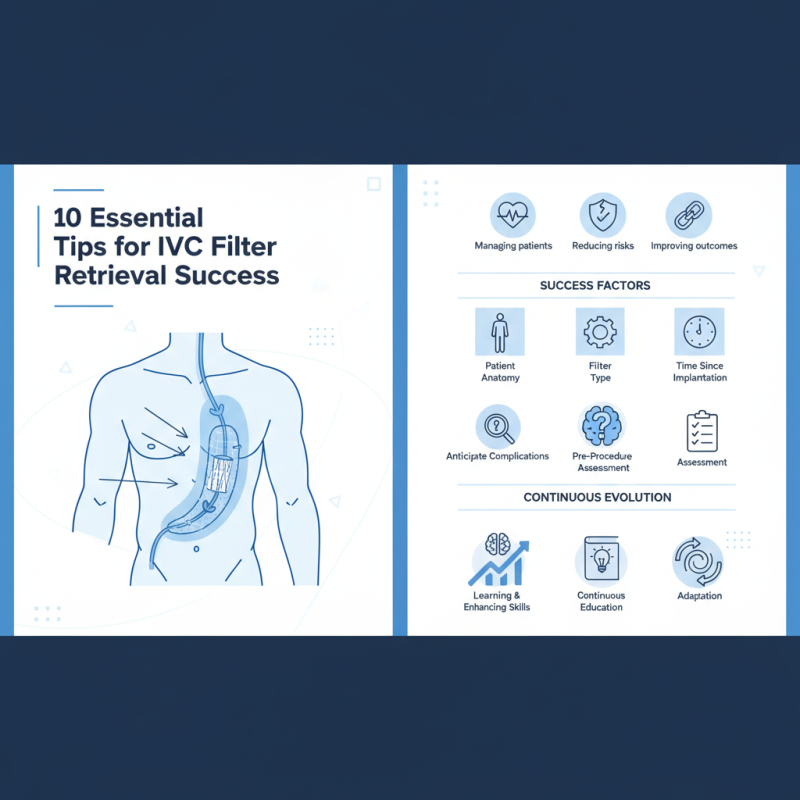
Success in IVC filter retrieval depends on various factors. Surgeons must consider patient anatomy, filter type, and time since implantation. Each case may present unique challenges. It is essential to anticipate possible complications. A thorough pre-procedure assessment can help in making informed decisions.
Despite advancements in techniques, some retrievals may not go as planned. This is where reflection is vital. Learning from each procedure can enhance skills and outcomes. IVC filter retrieval is not just a technical skill; it’s an evolving practice that requires continuous education and adaptation.
Understanding IVC Filters: Types, Indications, and Retrieval Challenges
Inferior vena cava (IVC) filters are devices used to prevent pulmonary embolism. They are often indicated for patients at high risk of deep vein thrombosis (DVT) but cannot use anticoagulants. According to recent studies, about 25% of patients who receive IVC filters may have them long-term, which can lead to complications. These complications include filter migration or fracture. The sheer variety of filters makes retrieval challenging.
Retrieving IVC filters is not always straightforward. One major hurdle is the presence of a clot that could complicate the process. A study from the American College of Chest Physicians indicates retrieval rates may drop to 50% if filters are left in for extended periods, emphasizing the importance of timely intervention. Effective evaluation and imaging can help assess the risks before attempting retrieval. Patients may experience anxiety during this phase, as the risks of complications loom large.
Training and best practices significantly impact retrieval success. However, even well-trained professionals face difficulties. The retrieval tools are not perfect, and procedures may be hampered by anatomical variations. Regular reflection on past retrieval cases can help practitioners improve their techniques and minimize risks. Practicing with more complex cases could be beneficial for future endeavors, leading to better outcomes.
Pre-Retrieval Preparation: Imaging Techniques and Patient Assessment
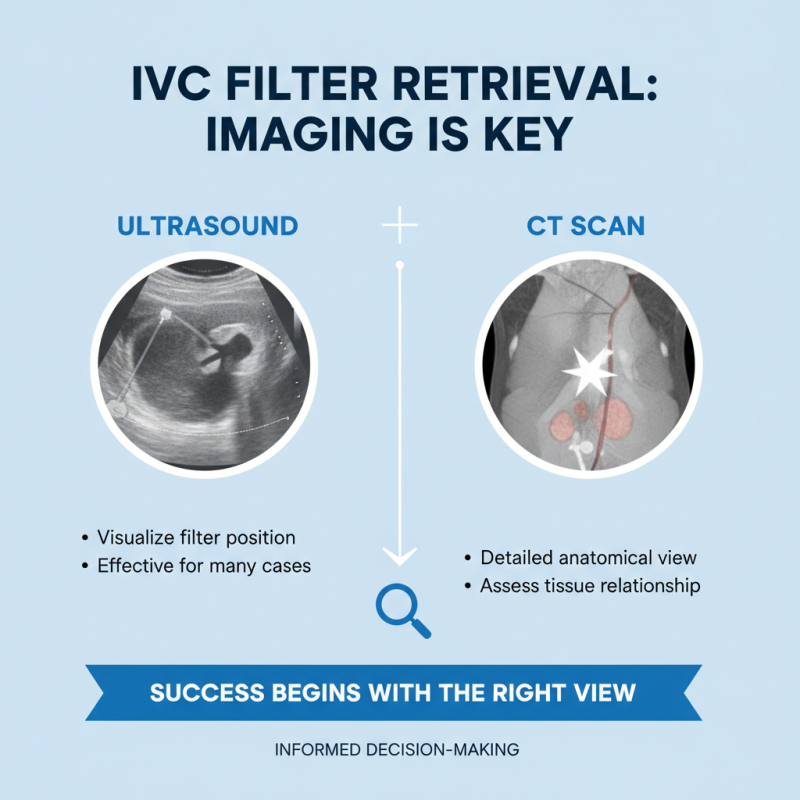
The success of IVC filter retrieval begins well before the procedure. Proper imaging techniques are crucial. They help in assessing the filter's position and structure. Ultrasound can visualize the filter effectively in many cases. CT scans provide detailed images, revealing the filter's relationship with surrounding tissues. Each imaging method has its strengths. Selecting the right approach is key to a successful outcome.
Patient assessment is equally important. Evaluating the patient's clinical history allows for better understanding. Factors such as previous interventions, coagulation status, and anatomical variations must be considered. Communication with the patient is vital. Clear explanations about the procedure alleviate anxiety. It’s not just about technical skills; the human aspect is crucial too.
While preparing, some challenges may arise. Not all filters lead to easy retrieval. Complications can occur due to filter migration or embedding in the vessel wall. Flexibility in approach can help manage these complications. Reflection on each retrieved filter case aids future procedures. Every success tells a story, but every failure does too. Understanding these nuances can enhance overall success in IVC filter retrieval.
The Retrieval Procedure: Essential Techniques and Instrumentation
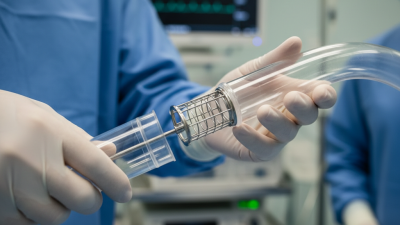
Retrieving an inferior vena cava (IVC) filter requires precise techniques and proper instrumentation. Understanding the anatomy of the IVC is critical during the retrieval process. Studies indicate that successful retrieval rates exceed 90% when proper imaging guidance is utilized. Fluoroscopy provides real-time imaging, allowing for accurate placement of retrieval devices. However, it’s essential to recognize that not all filters are designed for easy removal.
The choice of retrieval instruments can significantly impact outcomes. For instance, specialized retrieval devices must be used to navigate the complex vascular anatomy. A report noted that 15% of retrieval attempts are complicated due to filter entrapment or migration. Operators should be skilled in manipulating these instruments, but challenges remain. Unanticipated difficulties during the procedure can lead to increased complication rates. Clinicians must communicate effectively with their teams to address issues in real-time.
While many techniques exist, there is always room for improvement. Inadequate training can hinder success in retrieval procedures. Continuous education on evolving techniques is crucial. The medical community should focus on both procedural competency and patient safety. Data suggests that ongoing training improves proficiency in IVC filter retrieval, reducing adverse events. As practices evolve, the emphasis on learning from each retrieval encounter is vital.
10 Essential Tips for IVC Filter Retrieval Success
| Tip Number | Technique | Description | Instrumentation |
|---|---|---|---|
| 1 | Patient Selection | Carefully select patients who are suitable for retrieval. | CT scan, Ultrasound |
| 2 | Pre-Procedural Planning | Develop a comprehensive retrieval plan. | Angiography tools |
| 3 | Use of Sheath | Utilize appropriate sheath for accessing the filter. | Micropuncture kit |
| 4 | Guidewire Placement | Position guidewire accurately to support retrieval. | Guidewires |
| 5 | Filter Engagement | Ensure proper engagement with the filter for successful removal. | Retrieval catheter |
| 6 | Assess Angles | Evaluate access angles for optimal retrieval. | Fluoroscopy |
| 7 | Retrieval Technique | Follow recommended techniques for smooth retrieval. | Retrieval snare |
| 8 | Post-Retrieval Imaging | Conduct imaging to confirm complete retrieval. | Post-procedural CT |
| 9 | Monitoring | Monitor the patient for any complications post-retrieval. | Vital signs monitor |
| 10 | Documentation | Document the procedure details and outcomes. | Electronic health record system |
Recognizing Complications: Managing Risks During IVC Filter Retrieval
Retrieving an IVC filter can present significant challenges. Complications may arise during the procedure, affecting patient outcomes. Understanding these challenges is vital for successful management. According to a recent study, around 12% of filter retrieval attempts face complications, highlighting the need for careful planning.
Risk factors often include filter location and duration of placement. Filters left for extended periods can become embedded in the vessel wall. Removal attempts in such cases exhibit higher complication rates. A survey revealed that 75% of interventional radiologists agree on the importance of pre-procedural imaging. This practice aids in assessing the filter’s condition and optimizing retrieval strategies.
Proper patient selection impacts outcomes greatly. Factors like patient's anatomy, and underlying health conditions can complicate retrieval. When assessing risks, clinicians should maintain open communication with patients. Discussing potential complications is crucial. This fosters trust and patient understanding, ultimately leading to better procedural experiences.
Post-Retrieval Care: Monitoring and Follow-Up Protocols for Patients
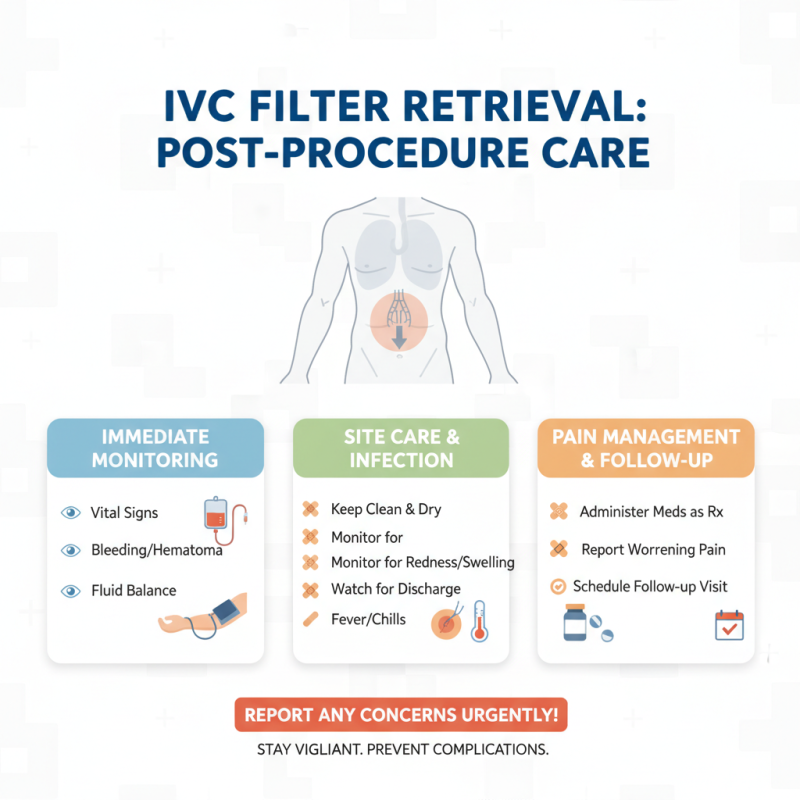
Post-retrieval care is crucial for patients who undergo IVC filter retrieval. Close monitoring is essential to identify any complications. Patients should be observed for signs of infection or increased pain at the retrieval site. Redness or swelling can indicate issues that require immediate attention. Staying vigilant can prevent further complications from arising.
Follow-up appointments play a critical role in the recovery process. During these visits, healthcare providers assess the patient’s overall health and the condition of the retrieval site. Patients may be asked about any changes in symptoms or health status. It's important for them to openly communicate any concerns they have. Adhering to follow-up protocols ensures proper healing and peace of mind.
Some patients find it difficult to stay on track with their follow-up care. Life can get busy, leading to missed appointments. This gap can complicate recovery. It's vital for patients to be proactive in their care. Setting reminders or seeking support from family can help. Engaging in open conversations with healthcare providers enhances the recovery process and builds a supportive environment.
Related Posts
-
What is IVC Removal and How Does it Work?
-
How to Safely Remove IVC Filters and What You Need to Know
-
10 Essential Tips for Effective IVC Removal You Need to Know
-
Top 2025 Tips for Effective Filter Removal Techniques and Best Practices
-
10 Essential Tips for Choosing HSG Catheters Efficiently?
-

What is a Bone Marrow Biopsy Kit and How is it Used?