
Understanding Three Way Stopcocks: Their Types, Uses, and Importance

Three way stopcocks play a vital role in medical settings. These devices facilitate fluid management in various clinical procedures. According to a report by Research and Markets, the global stopcock market is expected to reach $750 million by 2025. This surge indicates the growing emphasis on efficient fluid handling in healthcare.

The three way stopcock allows for multiple connections to a single IV line. This feature is essential in surgeries or during patient treatment. However, despite their importance, there are challenges. Misuse and improper handling can lead to complications. It is crucial for medical staff to understand the types and functions of these devices. Reports show that errors involving stopcocks contribute to 15% of IV-related complications.

Installation and maintenance are also critical. Regular training and assessments can enhance safety and efficacy. Some facilities overlook this, often leading to avoidable errors. A deeper understanding of the three way stopcock can foster better patient outcomes and minimize risks.

Understanding Three Way Stopcocks: Their Types, Uses, and Importance

Types of Three Way Stopcocks: An Overview of Common Variants

Three way stopcocks are essential in various medical and laboratory settings. They offer flexibility for fluid flow direction, making them valuable tools. Each type serves a specific purpose, allowing users to connect/disconnect multiple lines easily.

Common variants include the Luer lock and non-Luer designs. Luer locks provide a secure connection, reducing leakage risks. Non-Luer options are simpler but may not seal as tightly. It’s crucial to choose the right type based on the application. Sometimes, users might overlook the importance of compatibility, leading to potential issues.

In practice, these stopcocks can be prone to misuse. Incorrect handling can result in unintended flow paths. Users often assume they understand the operation, but this can lead to mistakes. Regular training and observation are necessary to minimize risks. Understanding the variations and their correct application can significantly enhance safety and efficiency.

Types of Three Way Stopcocks

This bar chart provides an overview of the various types of three way stopcocks and their usage percentages in medical applications. It highlights the most commonly used types in clinical settings to emphasize their importance.

Applications of Three Way Stopcocks in Medical and Laboratory Settings

Three way stopcocks are essential in hospitals and laboratories. They allow precise control over fluid flow. In medical settings, they help in managing intravenous therapy. Nurses rely on them for administering drugs effectively. Mistakes can lead to complications, highlighting the need for proper training.

In laboratories, three way stopcocks facilitate complex experiments. They enable the mixing of chemicals without exposing them to air. Scientists depend on their reliability for accurate results. However, improper usage can cause accidents. Awareness of potential hazards is crucial for safety.

These devices are usually made from durable materials. Their design allows for easy manipulation. However, wear and tear can occur over time. Regular inspections are necessary to maintain functionality. It's important to reflect on the impact of equipment on patient care and research outcomes.

Understanding Three Way Stopcocks: Their Types, Uses, and Importance - Applications of Three Way Stopcocks in Medical and Laboratory Settings

Type Materials Common Uses Applications Importance
Standard Three Way Stopcock Polycarbonate, PVC Fluid management, IV applications Hospitals, clinics Efficient fluid manipulation
Swing Stopcock Glass, PTFE Gas and liquid control Laboratories Versatile for various substances
Luer Lock Stopcock Polypropylene Secure fluid connections Medical devices Prevents leakage and contamination
Pressure Relief Stopcock Stainless Steel, Nylon Pressure management in systems Research facilities Safety in high-pressure applications

Importance of Sterility and Safety in Three Way Stopcock Design

Three way stopcocks play a crucial role in medical procedures. Their design directly impacts sterility and patient safety. Each component needs careful consideration to prevent contamination. For instance, the materials used must be non-reactive. This ensures no harmful interactions with fluids.

The mechanism of a three way stopcock can be complex. Small design flaws can lead to leaks or blockages. These issues might seem minor, but they can have serious consequences in clinical settings. A broken stopcock can compromise sterility. It also poses risks during critical interventions.

Training staff on proper handling is essential. Users must understand the importance of maintaining a sterile field. They should not overlook even small contaminants. Regular checks and maintenance routines can prevent many issues. A culture of safety and vigilance is necessary in any healthcare environment.

Specifications and Performance Metrics for Effective Stopcock Functionality

Understanding Three Way Stopcocks: Their Types, Uses, and Importance

Three way stopcocks are essential in various medical and laboratory settings. Their specifications and performance metrics can significantly impact functionality. A reliable stopcock must minimize leakage while ensuring smooth flow. Typical operating pressures range from 0 to 300 psi, depending on the application. It’s crucial to use stopcocks that comply with ISO standards for safety and consistency.

When selecting a three way stopcock, check its material composition. Polypropylene and glass are common, but each has pros and cons. Polypropylene offers lightweight durability, while glass provides better chemical resistance. According to industry reports, improperly selected materials can lead to equipment failure, causing costly downtime.

Tips: Always perform routine checks on stopcocks. Look for signs of wear or damage. Unexpected leaks can arise, signaling the need for maintenance. Additionally, consider the environment. High temperatures and aggressive chemicals can degrade materials over time, impacting performance. In all cases, proper storage can extend the lifespan of stopcocks, reducing long-term costs.

Regulatory Standards and Best Practices for Using Three Way Stopcocks

Understanding Three Way Stopcocks: Their Types, Uses, and Importance

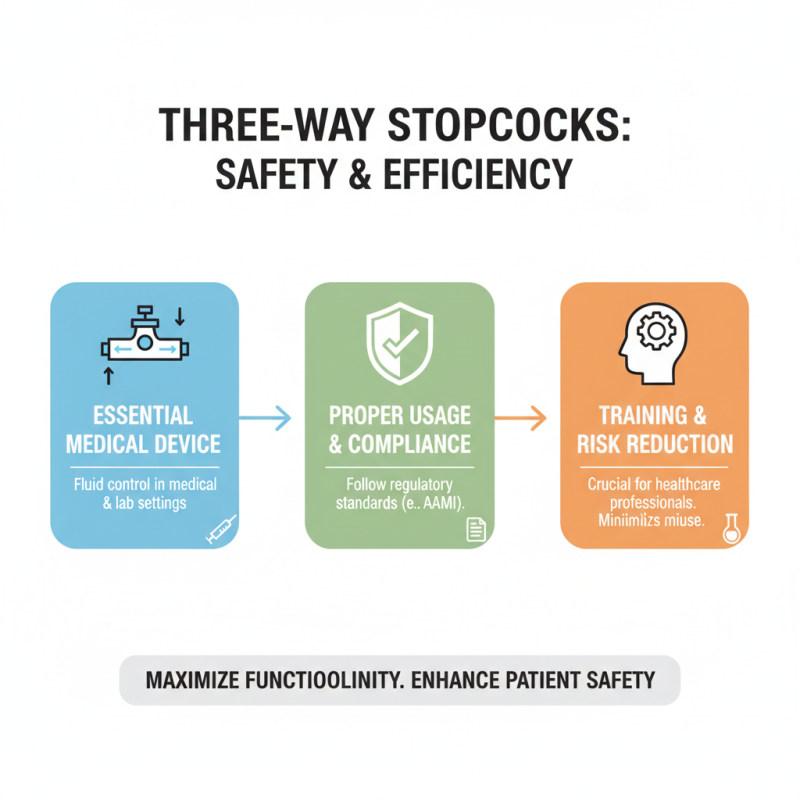
Three-way stopcocks are essential in various medical and laboratory settings. Their proper usage is crucial for safety and efficiency. To ensure compliance, it's important to follow existing regulatory standards. The Association for the Advancement of Medical Instrumentation (AAMI) emphasizes that proper training is vital for healthcare professionals when handling these devices. Understanding these guidelines maximizes their functionality and reduces risks of misuse.

Tips: Always verify connections before use. A faulty connection can lead to serious complications. Regularly inspect the integrity of stopcocks, as wear and tear can compromise performance.

Best practices suggest that facilities should maintain strict protocols for cleaning and sterilizing stopcocks. Contaminated equipment can significantly increase infection rates. According to a recent report by the Centers for Disease Control and Prevention (CDC), inconsistent safety practices contribute to healthcare-associated infections. This data underscores the need for continuous training and adherence to guidelines.

Tips: Establish a checklist for routine maintenance. Create reminders for staff to ensure compliance. Reflect on areas needing improvement, as ignoring small details may lead to bigger issues. Safety is always a priority in any medical practice; vigilance is key.