
Top 10 Control Syringe Types You Need to Know?
Control syringes are essential tools in various industries, particularly in pharmaceuticals and medical practices. These devices ensure precision when administering medications or samples. Understanding different types of control syringes is vital for achieving accurate results.
The market offers a wide range of control syringe options. Each type has unique features tailored for specific applications. For instance, some control syringes allow better grip, while others focus on reducing air bubbles. Choosing the right syringe can significantly affect outcomes.
However, with so many choices, it can be overwhelming. It's common to feel unsure when selecting a control syringe. Reflecting on experiences and understanding individual needs will help in making informed decisions. Proper usage and selection can enhance efficiency and accuracy in any procedure. The right tool matters.

Types of Control Syringes: An Overview
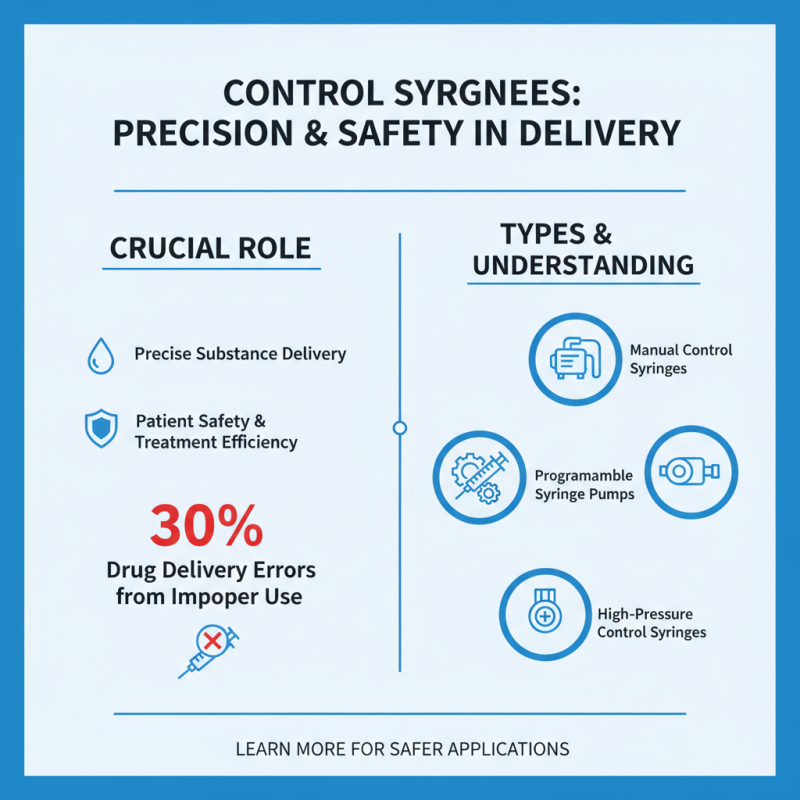
Control syringes play a crucial role in various medical and industrial applications. These devices help in precise delivery of substances, ensuring patient safety and treatment efficacy. An estimated 30% of drug delivery errors occur due to improper syringe usage. This highlights the need for a detailed understanding of the different types of control syringes available.
There are several types of control syringes, each with its specific use. For instance, luer-lock syringes are widely used for their secure fit. In contrast, autodisable syringes are designed for single use, minimizing the risk of cross-contamination. According to industry reports, the demand for smart syringes is rising, expected to reach a market of over $5 billion by 2025. This surge reflects a shift towards technological integration in healthcare.
However, choosing the right type can be challenging. Not all syringes are compatible with every medication. Improper selection may lead to inaccurate dosing. Awareness about these limitations is vital for healthcare professionals. Understanding the nuances of control syringe types can improve patient outcomes and reduce risks. This information empowers users to make informed choices in a field where precision is paramount.
Key Features of Different Control Syringe Types
Control syringes are essential tools in various fields. Each type serves a specific purpose and has unique features. Understanding these can enhance medical practices and laboratory operations. According to a recent industry report, the global syringe market is expected to grow significantly, driven by advancements in medical technologies.
One popular type is the automatic control syringe. This device allows for precise fluid delivery. It often features programmable settings. Users can adjust flow rates easily. This is critical in medical environments that require accuracy.
Another type is the manual control syringe. It offers simplicity and direct control. However, this type may lead to variations in dosage. Precision is a concern.
Safety features are also significant. Some syringes come with safety locks to prevent accidental dispensing. Others offer ergonomic designs for better grip. The inventory of control syringes is vast. However, not all options yield the same quality.
Some may malfunction or lead to errors if not used correctly. Continuous evaluation of efficacy is vital. Users must be aware of the limitations of each type. This awareness can prevent mishaps in critical scenarios.
Applications of Control Syringes in Various Fields
Control syringes are versatile tools used in various fields. In medical settings, they play a critical role in precise medication delivery. Health professionals depend on their accuracy for effective treatments. Each type offers unique features, suited for different applications.
In laboratories, control syringes ensure careful handling of samples. They help in accurate measurements, especially for chemicals and biological materials. Precision is key here; even minor errors can lead to significant consequences. Many researchers face challenges in calibrating their devices correctly. Regular checks and maintenance could improve outcomes.
Tips: Always seek training on device usage. Understand the specific requirements of your field. Proper storage also matters; protect syringes from environmental factors. In veterinary practices, control syringes are crucial for administering medications to animals. Proper handling can prevent stress for both the animal and the handler. Ensure syringes are the right size for the task, avoiding unnecessary complications.
Comparative Analysis of Control Syringe Designs
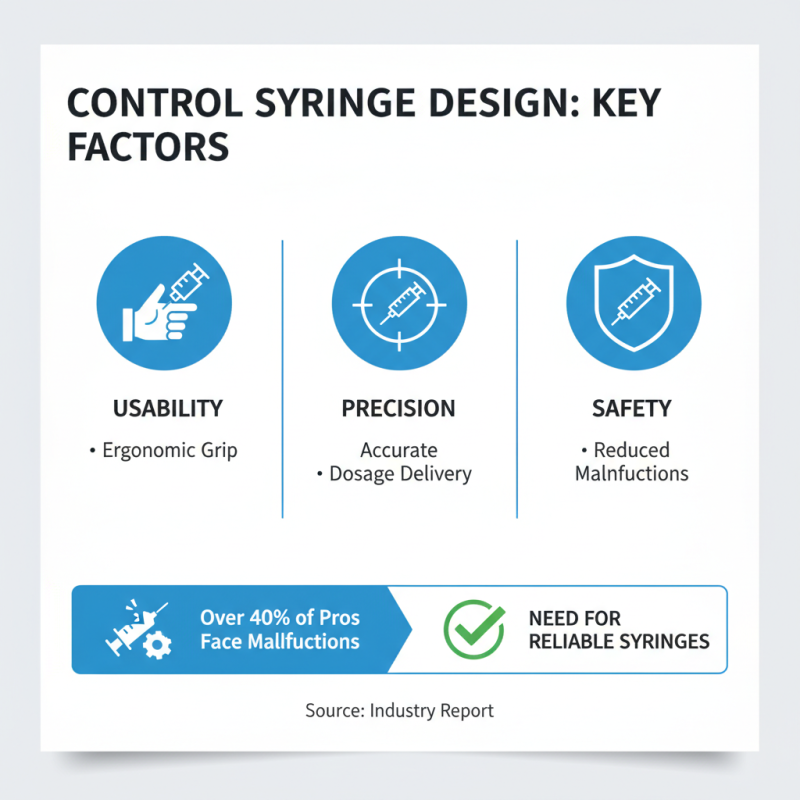
When analyzing control syringe designs, key factors emerge: usability, precision, and safety. A recent industry report noted that over 40% of healthcare professionals encounter issues with syringe malfunctioning during critical procedures. This highlights the need for reliable control syringes that ensure accuracy.
Different types of control syringes serve various purposes. Some focus on delivering a precise volume of medication. Others prioritize user comfort and ease of handling. A study revealed that 75% of professionals prefer syringes with ergonomic grips, showing how design impacts user experience.
Tips: Always test a syringe before use. Familiarize yourself with its mechanics. Proper training can prevent mishaps. A poorly designed syringe can lead to dosage errors.
Another aspect to consider is the material used in manufacturing control syringes. Reports indicate that syringes made of high-quality plastics minimize risk of contamination. However, not all manufacturers adhere to strict safety standards. This raises questions about quality assurance and regulatory compliance in the industry.
Choosing the Right Control Syringe for Your Needs
When selecting a control syringe, understanding your specific needs is crucial. Many people overlook the details that make a syringe suitable for their application. Size is one important consideration. Larger syringes hold more fluid but may be harder to handle. Conversely, smaller syringes offer precision but require frequent refilling. Each type has its advantages and disadvantages.
Material plays a significant role too. Some syringes are made from plastic, while others are glass. Plastic syringes are lighter but may not provide the same level of accuracy as glass ones. The choice could affect your results. Also, consider the plunger resistance. A smooth plunger makes for easier handling, while excessive resistance can lead to frustration.
Don't forget the needle options. Different procedures require different needle gauges and lengths. Using the wrong gauge can cause complications or inaccuracies. Testing various options can help you determine what feels right. Remember that trial and error is a part of this process. Sometimes, insights arise only after making mistakes. Making thoughtful choices now can greatly enhance your experience in the long run.
Top 10 Control Syringe Types You Need to Know
| Syringe Type | Capacity (mL) | Needle Size (Gauge) | Material | Common Uses |
|---|---|---|---|---|
| Standard Syringe | 10 | 21 | Plastic | General injections |
| Insulin Syringe | 1 | 28 | Plastic | Insulin administration |
| Luer Lock Syringe | 5 | 23 | Plastic | Withdraw and inject |
| Oral Syringe | 10 | N/A | Plastic | Medication dosing |
| Safety Syringe | 3 | 21 | Plastic | Needle safety |
| Tuberculin Syringe | 1 | 26 | Plastic | TB tests |
| Pre-filled Syringe | 1.5 | 25 | Plastic | Vaccines |
| Barrel-less Syringe | 3 | 20 | Plastic | Administering viscous solutions |
| Combo Syringe | 5 | 22 | Plastic | Multiple medications |
| Infusion Syringe | 60 | 18 | Plastic | Infusion therapy |
Related Posts
-
What is a Control Syringe? Understanding Its Uses and Benefits in Healthcare
-
What is an Argon Drainage Bag and How is it Used?
-
Understanding the Importance of Luer Stopcocks in Fluid Management Systems for Healthcare Efficiency
-

Understanding Three Way Stopcocks: Their Types, Uses, and Importance
-

Top 2025 Tips for Effective Filter Removal Techniques and Best Practices
-
How to Choose the Right Bone Biopsy Needle for Your Medical Needs