
Top 10 Bard Hemodialysis Catheter Suppliers Worldwide
Choosing a hemodialysis catheter supplier is a clinical and procurement decision, not a simple price comparison. This guide examines the Top 10 Bard Hemodialysis Catheter Suppliers Worldwide through product availability, documentation quality, distribution strength, and professional support. It also considers how reliably suppliers handle sterile packaging, lot traceability, catheter specifications, and delivery timelines.
The phrase bard hemodialysis catheter may refer to products associated with Bard’s vascular access portfolio, including items now managed through changing corporate and regional channels. Availability can differ by country, distributor, and hospital contract. Readers should verify current manufacturer details, regulatory status, and authorized supply routes before purchasing. Small details matter. A clear tray label matters. So does an intact seal.
Our comparison uses practical criteria familiar to dialysis teams and sourcing managers. These include product consistency, French-size options, tip design information, instructions for use, complaint handling, and technical communication. Clinical suitability still depends on patient anatomy, treatment requirements, infection-control policies, and professional judgment. No supplier is perfect.
This ranking is not a universal verdict. Public information can be incomplete, and distributor performance may change quickly. A supplier with strong global coverage may offer slower local support. Another may provide excellent communication but limited stock. That tension deserves attention. The final choice should be checked against hospital protocols, national requirements, clinician experience, and verified purchasing records. The goal is a clearer, safer starting point for evaluating worldwide suppliers, not a substitute for clinical or regulatory review.
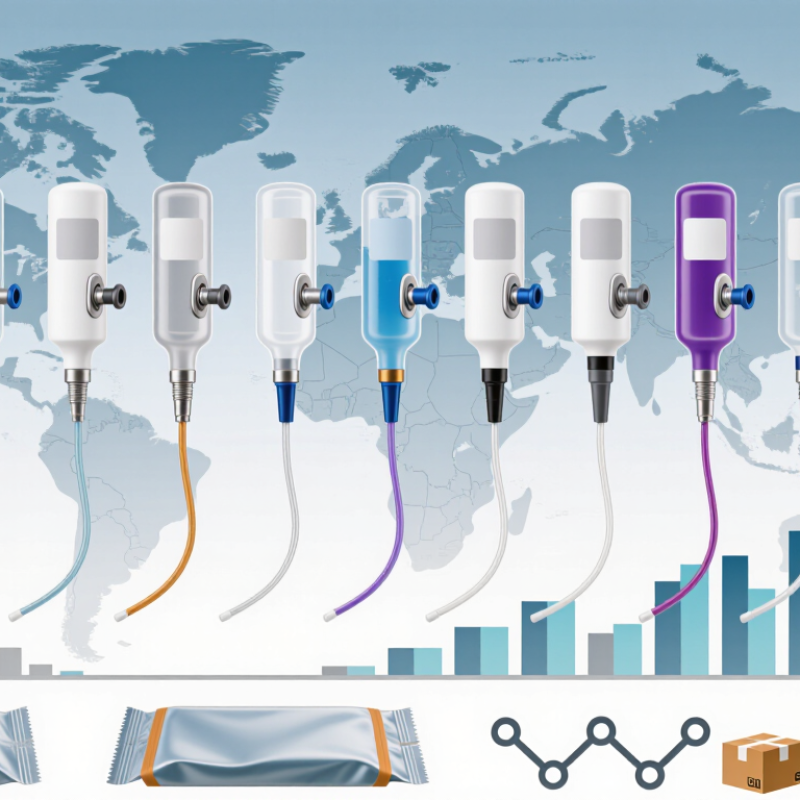
Bard Hemodialysis Catheters: Overview, Design, and Clinical Applications
Hemodialysis catheters provide rapid vascular access when fistula or graft placement is unsuitable. Their design usually includes dual lumens, radiopaque markers, and flexible biocompatible materials. The arterial lumen withdraws blood, while the venous lumen returns filtered blood. Tip geometry can influence recirculation, flow stability, and vessel-wall contact. These details matter during long treatment sessions.
The US Renal Data System 2023 Annual Data Report recorded more than 800,000 people living with kidney failure in the United States in 2021. This demand increases the need for reliable temporary and long-term access. Clinical teams commonly use tunneled catheters for urgent dialysis, delayed fistula maturation, or limited vascular options. However, catheter infection and thrombosis remain serious concerns. CDC infection-prevention guidance emphasizes hand hygiene, aseptic connection, hub disinfection, and careful dressing changes. Real-world performance can differ from laboratory claims. That gap deserves honest review.
Tips: Confirm catheter position before use, assess blood-flow pressures, and inspect the exit site every session. Follow local protocols for locking solutions and dressing care. Document fever, poor flow, pain, or swelling quickly. A practical weakness remains: patient movement, skin condition, and staff technique can undermine an excellent design. Supplier comparisons should therefore examine published clinical evidence, surveillance data, material safety, and training support—not appearance alone.
Top 10 Bard Hemodialysis Catheter Suppliers Worldwide - Bard Hemodialysis Catheters: Overview, Design, and Clinical Applications
Comparative overview of commonly specified hemodialysis catheter configurations and clinical use parameters
| No. | Catheter Configuration | Typical Patient Profile | Common French Size | Typical Length Range | Lumen Arrangement | Tip or Shaft Design | Common Placement Site | Primary Clinical Application |
|---|---|---|---|---|---|---|---|---|
| 1 | Short-term non-tunneled dual-lumen catheter | Adults requiring urgent or temporary vascular access | 11–13.5 Fr | 15–20 cm | Separate arterial and venous lumens | Straight shaft; standard distal tip | Right internal jugular or femoral vein | Emergency dialysis and intensive-care access |
| 2 | Longer non-tunneled dual-lumen catheter | Patients needing temporary access when the femoral route is used | 12–14 Fr | 20–24 cm | Dual-lumen, high-flow configuration | Radiopaque shaft with atraumatic distal end | Femoral vein | Short-duration renal replacement therapy |
| 3 | Tunneled cuffed dual-lumen catheter | Patients without a usable arteriovenous fistula or graft | 14–15.5 Fr | 23–36 cm | Dedicated arterial and venous channels | Subcutaneous cuff with curved or straight exit segment | Right internal jugular vein, tunneled to the chest | Intermediate- or long-term outpatient hemodialysis |
| 4 | Symmetrical-tip tunneled catheter | Patients requiring predictable bidirectional blood flow | 14–15.5 Fr | 23–36 cm | Coaxial or side-by-side dual lumen | Symmetrical distal openings designed to reduce positional dependence | Internal jugular or selected femoral access | Repeated dialysis sessions with flow instability concerns |
| 5 | Split-tip tunneled catheter | Patients needing separated inflow and outflow openings | 14–16 Fr | 19–36 cm | Two channels terminating at different distal positions | Split distal limbs intended to limit recirculation | Right internal jugular vein | Chronic hemodialysis when catheter access is unavoidable |
| 6 | High-flow tunneled catheter | Adults treated with higher prescribed blood-flow rates | 14.5–16 Fr | 23–55 cm | Large-bore dual lumen | Flow-optimized tip geometry; radiopaque markers may be included | Central venous circulation, usually right internal jugular | Maintenance dialysis where blood-flow targets are difficult to achieve |
| 7 | Pediatric tunneled dialysis catheter | Children or small adolescents requiring dialysis access | 8–12 Fr | 15–28 cm | Small-bore dual lumen | Flexible shaft with cuffed subcutaneous segment | Internal jugular or femoral vein, based on anatomy | Pediatric acute or chronic hemodialysis |
| 8 | Catheter with antimicrobial surface or locking strategy | Patients with elevated catheter-related infection risk | 12–16 Fr | 15–36 cm | Dual lumen with specified lock volume | May include antimicrobial material, coating, or antimicrobial lock compatibility | Internal jugular or femoral vein | Selected cases requiring enhanced infection-prevention measures |
| 9 | Tunneled catheter for difficult venous anatomy | Patients with central venous stenosis, occlusion, or prior access failure | 14–16 Fr | 28–55 cm | Dual lumen with extended length options | Long shaft; may use a curved or pre-shaped configuration | Femoral, translumbar, or other specialist-selected route | Alternative access when conventional central veins are unsuitable |
| 10 | Temporary catheter for continuous renal replacement therapy | Critically ill patients receiving prolonged extracorporeal therapy | 11.5–13.5 Fr | 15–24 cm | High-flow dual lumen suitable for continuous therapy circuits | Straight or curved tip with radiopaque visualization | Right internal jugular or femoral vein | Continuous venovenous hemodialysis or hemofiltration |
- Actual catheter dimensions, flow ratings, priming volumes, and available lengths vary by model and should be confirmed in the applicable instructions for use.
- The right internal jugular vein is generally preferred for tunneled hemodialysis access when anatomically suitable; femoral access is commonly reserved for urgent or alternative access.
- Catheter selection should consider patient size, venous anatomy, prescribed blood-flow rate, anticipated duration, infection risk, and local clinical protocols.
- All insertion and maintenance procedures should follow ultrasound-guided placement practices and current vascular-access infection-prevention guidance.
Related Posts
-
2026 Best Bard Hemodialysis Catheter for Global Buyers
-

How to Choose the Right Drainage Bag for Your Needs
-

What is a Biopsy Needle and How Does It Work?
-
What Are the Best Aln Filters for 2026 Global Procurement?
-
2026 Top Coaxial Needle Trends for Global Buyers Insights?
-

2026 Top Trends in Medical Equipment Bone Marrow Needle Innovations?