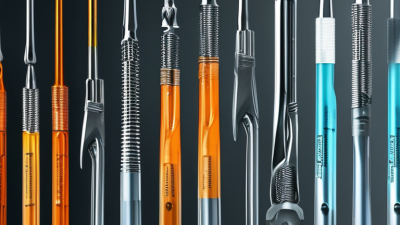
China Top Tru Cut Biopsy Needle Manufacturers Suppliers
China’s tru cut biopsy needle market is expanding with demand for dependable sampling, sharper cannulas, and consistent manufacturing quality. Hospitals and diagnostic centers need more than a low purchase price. They need needles that support accurate tissue collection, controlled insertion, and predictable handling under ultrasound or CT guidance.
A tru cut biopsy needle usually includes a cutting cannula, stylet, depth markings, and a compatible firing mechanism. Small details matter. A poorly finished edge may increase resistance. Unclear markings can complicate depth control. Packaging also deserves attention, especially when sterility and traceability are critical. These points should be checked through documented quality systems, material records, and practical evaluation.
Dr. Liane Philpotts, a recognized breast-imaging specialist, has emphasized a central biopsy principle: “The procedure must answer the clinical question while protecting the patient.” That idea applies across many biopsy settings. Manufacturers and suppliers should therefore explain needle gauge options, specimen notch dimensions, firing length, compatibility, and lot-level inspection procedures. They should also provide clear instructions for use and responsive technical support.
Not every supplier performs equally.
Some product pages make broad claims without showing test data. That is a weakness. Buyers should compare sterilization validation, packaging integrity, complaint handling, and clinical feedback before selecting a partner. Experienced manufacturers may offer private labeling and customized specifications, but customization should never weaken essential safety controls.
This guide examines China’s leading tru cut biopsy needle manufacturers and suppliers. It considers product design, production capability, certifications, communication, and after-sales reliability. The final choice still requires careful verification. No catalog can replace hands-on assessment.
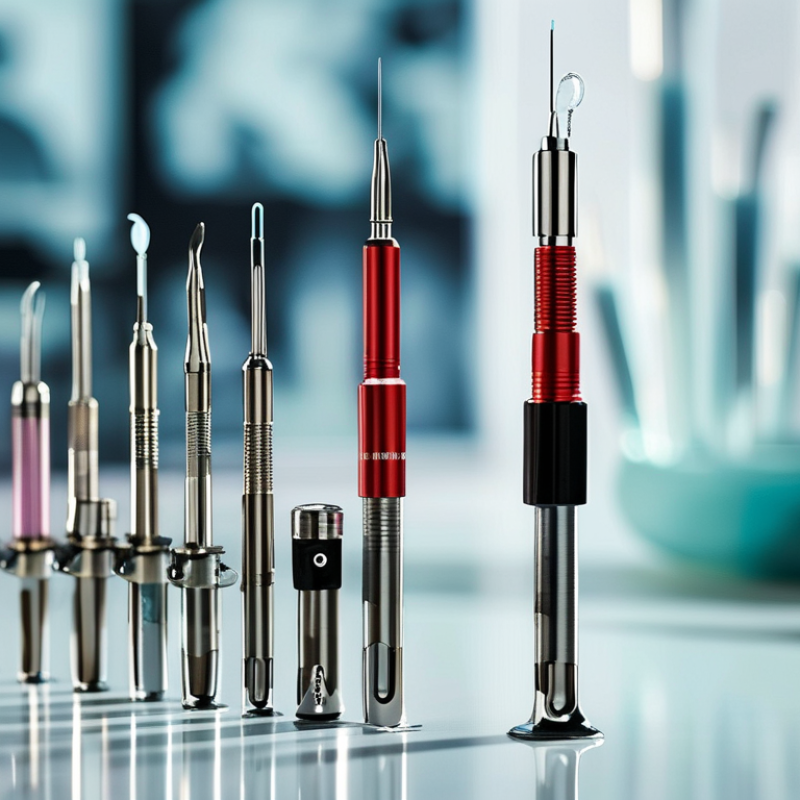
Tru-Cut Biopsy Needles: Definition, Purpose, and Clinical Applications
A Tru-Cut biopsy needle is a spring-loaded, hollow device that removes a cylindrical tissue core. Unlike fine-needle aspiration, it preserves tissue architecture for histology and biomarker testing. The needle usually contains an inner stylet and a cutting cannula. A sharp click, then a small core in the specimen cup.
Clinicians use these needles to investigate breast, liver, prostate, kidney, lung, and soft-tissue lesions. Ultrasound or computed tomography guidance helps the operator target solid tissue while avoiding vessels and organs. This matters because the International Agency for Research on Cancer reported about 20 million new cancer cases worldwide in 2022. Breast cancer alone represented approximately 2.3 million cases. Accurate sampling remains clinically important.
Needle gauge, throw length, tissue firmness, and coaxial access influence performance. A 14-gauge device may suit many solid breast lesions, while smaller gauges can support selected liver or soft-tissue procedures. Local protocols must decide. Manufacturers and suppliers should provide sterilization validation, clear depth markings, reliable firing control, and compatibility with guidance systems. Clinical teams also need traceable lots and practical training materials.
The method is not flawless. Crush artifact, blood contamination, and sampling error can complicate interpretation. A clean-looking core may still miss a heterogeneous tumor. That uncomfortable limitation deserves attention. Published clinical reports generally support core biopsy for diagnostic accuracy, but results depend on lesion selection, imaging guidance, operator experience, and pathology quality. Careful handling begins before the needle enters the skin.
How Tru-Cut Biopsy Needles Work and Their Main Design Features
A Tru-Cut biopsy needle removes a narrow tissue core for histological examination. It usually contains a spring-loaded stylet and a sharp outer cannula. During the procedure, imaging guides the needle toward the target. The stylet enters first and captures tissue in its notch. The outer cannula then advances across the notch. This action cuts and separates the specimen cleanly. The sample stays inside the needle for controlled withdrawal.
Its main design features support accuracy, handling, and specimen quality. A sharp, balanced tip can reduce insertion force. A visible echogenic marker helps clinicians track the needle under ultrasound. Depth markings provide a practical reference during advancement. Some designs include a coaxial sheath, which can reduce repeated tissue penetration. The handle should allow controlled firing and secure grip. Gauge and needle length must match the lesion, imaging method, and patient anatomy. Bigger is not always better.
In routine practice, specimen quality depends on more than needle construction. Target movement, tissue stiffness, and operator timing also matter. Small deviations matter. A poorly aligned needle may collect blood or fragmented tissue. Excessive force can deform the sample. Training, sterile technique, imaging confirmation, and careful post-procedure monitoring remain essential. No design is perfect. Device evaluation should include cutting consistency, visibility, firing control, and reliable packaging integrity.
China Top Tru Cut Biopsy Needle Manufacturers Suppliers - How Tru-Cut Biopsy Needles Work and Their Main Design Features
| Design or Performance Dimension | Typical Specification or Configuration | How It Works or Why It Matters | Common Clinical Consideration |
|---|---|---|---|
| Core operating principle | A spring-loaded or manually advanced inner stylet followed by an outer cutting cannula | The stylet enters or advances into the target tissue first. The sharp outer cannula then moves over the stylet and cuts a narrow tissue core into the specimen notch. | The mechanism is designed to obtain a relatively intact cylindrical specimen for histopathological examination. |
| Needle gauge | Common core-biopsy sizes include approximately 14G, 16G and 18G; smaller gauges have larger outside diameters | Gauge selection affects the balance between specimen volume, tissue disruption, access-track size and procedural handling. | The appropriate gauge depends on the organ, lesion characteristics, imaging method and the required diagnostic tissue volume. |
| Needle length | Frequently available in short, standard and extended lengths, commonly around 10–20 cm depending on the intended access route | The shaft length allows the needle to reach superficial or deeper targets while maintaining control and visibility during placement. | Length should be selected according to patient anatomy, target depth and the guidance technique. |
| Specimen notch | An open tissue-receiving notch near the distal end; notch lengths commonly range from about 10–20 mm | The notch temporarily holds the tissue core before the cutting cannula advances across it. | A longer notch may collect more tissue, but the final specimen depends on tissue type, targeting accuracy and cutting performance. |
| Stylet tip | Echogenic or sharpened distal tip with a specimen notch positioned behind the tip | The tip facilitates controlled tissue entry, while the notch provides the space in which the core is captured. | A clearly defined tip and notch can support accurate placement under ultrasound or other imaging guidance. |
| Outer cutting cannula | Thin-wall stainless-steel tube with a sharpened beveled distal edge | The cannula shears the tissue across the notch and separates the core from the surrounding tissue. | Sharpness, concentric alignment and surface finish influence cutting smoothness and specimen integrity. |
| Firing mechanism | Manual handle or spring-loaded automatic handle with a rapid forward cannula stroke | A rapid, controlled stroke can reduce the time that the needle remains in motion during tissue sampling. | The operator should confirm the device is armed, locked and compatible with the intended sampling technique. |
| Sampling stroke | Common automatic core-biopsy stroke options are approximately 15–22 mm, depending on device design | The stroke determines how far the stylet and cutting cannula travel during tissue capture. | A shorter stroke may be useful where access space is limited; the selected stroke must match the target and device instructions. |
| Coaxial compatibility | Some systems use an introducer sheath, commonly selected one gauge larger than the biopsy needle | The sheath can provide a stable access path and permit multiple tissue samples without repeatedly puncturing the skin. | The sheath and biopsy needle must be dimensionally compatible and used according to the applicable procedure protocol. |
| Imaging visibility | Echogenic markings, grooves or a textured distal section may be incorporated for ultrasound visibility | The enhanced surface reflects ultrasound energy and helps the operator identify the needle tip or shaft. | Visibility varies with angle, tissue depth, imaging settings and the specific needle design. |
| Handle ergonomics | Textured grip, thumb rest, firing button and depth or stroke indicators | The handle supports controlled advancement, activation and withdrawal while helping the operator maintain needle orientation. | Clear controls and tactile feedback can help reduce handling errors during image-guided procedures. |
| Materials | The needle shaft and cutting cannula are typically medical-grade stainless steel; the handle may use medical-grade polymers | Stainless steel provides the stiffness, corrosion resistance and cutting edge required for percutaneous tissue sampling. | Material selection should support biocompatibility, structural strength and the specified sterilization method. |
| Sterility and use status | Commonly supplied sterile and intended for single use | Sterile, single-use packaging helps reduce cross-contamination risk and preserves the specified cutting performance. | Inspect package integrity, expiration information and device condition before use; do not reuse unless explicitly permitted by applicable regulations. |
| Typical application areas | Image-guided sampling of breast, liver, kidney, prostate, soft tissue and other accessible lesions | The core format provides tissue architecture that can support diagnosis, grading or ancillary laboratory testing when clinically indicated. | The final device choice must be made by a qualified healthcare professional based on the clinical indication and local instructions for use. |
Note: Specifications are representative industry ranges rather than a product specification. Exact dimensions, stroke length, sterilization method and compatibility should be verified in the applicable instructions for use.
Key Factors for Choosing a Tru-Cut Biopsy Needle Supplier in China
China Top Tru-Cut Biopsy Needle Manufacturers Suppliers
Choosing a Tru-Cut biopsy needle supplier in China requires more than comparing unit prices. Clinical experience shows that needle sharpness, cutting cannula design, and specimen quality affect procedure consistency. Ask for samples with different gauge options and test them with your intended tissue model. Small details matter.
Check the supplier’s quality system, production records, and material traceability. A reliable manufacturer should provide clear documentation for stainless steel grades, sterilization methods, shelf life, and packaging integrity. ISO 13485 certification is useful, but it should not replace an on-site audit or independent verification. Request batch records and review how the supplier handles nonconforming products. Measure twice.
Communication also deserves careful attention. Confirm minimum order quantities, sampling time, production capacity, and delivery performance before signing an agreement. A responsive supplier should explain whether the needle tip, firing mechanism, handle, or protective sheath can be customized. Packaging should protect the sharp tip during transport and remain easy to inspect in a clinical setting.
Do not choose only by a polished catalog. A low quotation may hide weak traceability or inconsistent inspection. No supplier is flawless, and early samples may not represent full-scale production. Define acceptance criteria in writing, including cutting performance, visual defects, dimensions, and sterility documentation. Keep communication records and reassess the supplier after each production batch.
Quality Standards and Manufacturing Processes of Chinese Suppliers
China Top Tru Cut Biopsy Needle Manufacturers Suppliers
Quality begins with controlled materials and repeatable production. Chinese suppliers commonly follow ISO 13485 quality management requirements for medical devices. The standard requires documented risk controls, traceability, validation, and corrective actions. ISO’s certification survey records tens of thousands of ISO 13485 certificates worldwide. This shows the standard’s wide industrial acceptance, not automatic product excellence.
Manufacturing usually starts with medical-grade stainless steel tubing. Automated drawing controls diameter and wall thickness. Laser cutting creates the needle tip, while grinding forms the cutting geometry. Each batch should receive visual inspection, dimensional testing, and functional sampling. Sterilization processes require validation, monitoring, and retained records. Cleanroom assembly also reduces particles and handling contamination.
Details matter.
A 2024 Grand View Research report identified rising biopsy-device demand, supported by earlier diagnosis and image-guided procedures. That growth increases pressure on suppliers to prove consistency, not merely offer low prices. Buyers should request batch records, sterilization validation, tensile-test results, and complaint data. ASTM and ISO test methods can strengthen comparisons between samples. Yet, no factory is flawless. Manual checks may still miss small burrs or uneven bevels. Suppliers should therefore combine trained inspectors with calibrated automated systems. Capability must be verified through independent audits and repeated pre-shipment sampling.
Comparing China’s Top Tru-Cut Biopsy Needle Manufacturers and Suppliers
Comparing China’s top Tru-Cut biopsy needle manufacturers and suppliers requires more than checking price lists. A reliable manufacturer should show consistent cutting performance, clear specifications, and controlled production records. Important details include needle gauge, firing length, specimen notch size, and tip sharpness. These features affect tissue capture during real procedures. They should be easy to verify.
Experienced buyers often request samples before placing large orders. A practical test checks smooth penetration, stable handle movement, and clean core retrieval. Some Chinese manufacturers offer manual and automatic models, coaxial options, and customized lengths. Suppliers may provide broader product ranges, but their technical control can vary. Ask whether they own the factory or represent several sources. This distinction matters.
Quality evidence should include ISO 13485 certification, batch traceability, sterilization information, and a detailed inspection process. Packaging should protect the needle from bending, moisture, and accidental opening. Communication also reveals reliability. Can the supplier explain tolerances clearly? Can they respond with drawings instead of vague promises? Not every polished catalog reflects strong engineering. That is worth remembering. Delivery speed, minimum order quantity, and after-sales support also deserve comparison. A small pilot order may expose labeling errors or inconsistent handles before they become costly. My view is slightly cautious: the lowest quotation can be attractive, but dependable biopsy equipment needs repeatable performance, documented quality, and honest technical discussion.
China Top Tru-Cut Biopsy Needle Manufacturers & Suppliers
Comparing common Tru-Cut biopsy needle gauge specifications used when reviewing supplier catalogs.
The chart compares common needle gauges with their nominal standard outer diameters. A lower gauge number indicates a larger needle diameter. Actual Tru-Cut biopsy needle dimensions may vary by cannula design, cutting tip, usable length, and manufacturer specifications, so buyers should verify technical drawings and product documentation before evaluation.
Related Posts
-
How to Choose the Right Bone Biopsy Needle for Your Needs?
-
How to Choose the Right Bone Biopsy Needle for Accurate Diagnosis?
-
How to Choose the Right Bone Biopsy Needle for Your Medical Needs
-

2026 Top Biopsy Needle Types to Achieve Optimal Results?
-

How to Prepare for a Heart Biopsy Procedure?
-
Why Choose a Coaxial Needle for Your Medical Procedures?