
2026 Top Argon Drainage Bag Suppliers for Global Buyers
Choosing a dependable argon drainage bag supplier requires more than comparing prices or browsing polished catalog pages. Global buyers need evidence of manufacturing consistency, material control, sterile packaging, and practical export experience. This 2026 guide introduces suppliers that deserve closer evaluation across international markets.
A reliable supplier should provide clear product specifications, batch traceability, inspection records, and responsive technical support. Buyers should confirm bag capacity, connector design, drainage performance, packaging protection, and storage conditions before placing orders. Samples can reveal sealing quality, label clarity, and handling comfort better than a sales presentation. Details matter.
Supplier performance may also depend on production scale, minimum order quantities, lead times, and destination-specific documentation. Experienced manufacturers usually explain these points without hiding important limitations. However, supplier information is not always complete. Some websites offer impressive claims but limited verification. That weakness deserves attention.
This overview focuses on practical due diligence rather than simple rankings. It considers manufacturing experience, quality systems, communication reliability, and long-term supply potential. Buyers should still review current certificates and request independent verification where necessary. No directory stays perfect. Market conditions, factory capacity, and compliance requirements can change during 2026. A careful purchasing decision combines this guide with direct supplier discussions, sample evaluation, and documented quality checks.
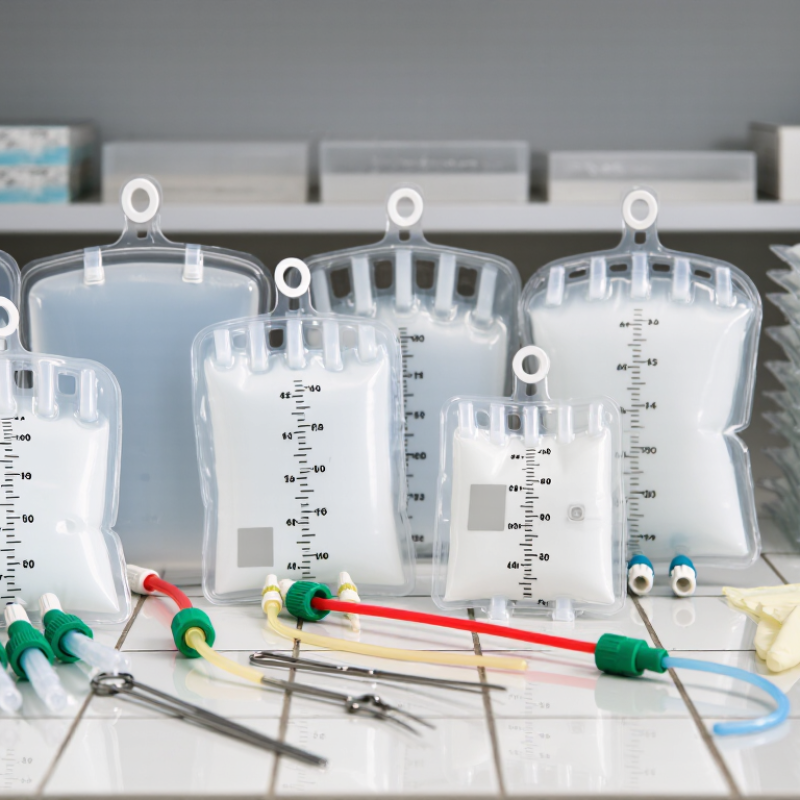
Argon Drainage Bag Types: 500–2,000 mL Capacities and Port Configurations
2026 Top Argon Drainage Bag Suppliers for Global Buyers
Argon drainage bags commonly range from 500 to 2,000 mL. The right capacity depends on patient mobility, drainage frequency, and collection time. A 500 mL bag suits ambulatory use and reduces leg weight. Larger 1,000–2,000 mL bags support overnight drainage but need secure positioning. In practice, capacity markings can be difficult to read under low light. Buyers should inspect graduation accuracy, seam strength, and the clarity of printed units.
Port configuration affects compatibility and clinical handling. Common options include a single inlet, dual inlets, needle-free sampling ports, and bottom drain valves. A bottom outlet should open smoothly and close without leakage. Dual-port designs may support connection flexibility, yet they can increase cleaning and inspection points. Fortune Business Insights estimated the urinary drainage bags market at about USD 1.6 billion in 2023, with continued growth expected through the decade. This supports stronger demand for dependable, standardized configurations, not simply cheaper volume.
Tips: Match the inlet diameter with the drainage tube before purchasing. Confirm whether the port uses a stepped connector or a fixed fitting. Request leak-test records, sterilization details, and batch traceability. ISO 13485 certification can indicate a controlled quality system, but it does not replace product-level verification. Grand View Research also identifies home care and hospital use as major demand segments. That split matters. A hospital bag may prioritize rapid drainage, while home users often need lighter weight and easier valve control. Some specifications still appear vague. That deserves a second review.
2026 Top Argon Drainage Bag Suppliers for Global Buyers - Argon Drainage Bag Types: 500–2,000 mL Capacities and Port Configurations
| Configuration | Nominal Capacity | Typical Application | Inlet Port Options | Outlet Configuration | Graduated Scale | Common Material Requirements | Global Buyer Checks |
|---|---|---|---|---|---|---|---|
| Type A | 500 mL | Low-volume postoperative or localized drainage | Single patient-side inlet; tube compatibility must be specified | Clamp, cap, or needle-free drainage outlet depending on design | Usually graduated in mL; verify graduation interval and accuracy | Medical-grade flexible polymer; latex-free construction is commonly requested | Sterility method, connector dimensions, leakage resistance, and expiry date |
| Type B | 750 mL | Moderate-volume wound or surgical drainage | Single inlet or inlet with an integrated access port | Bottom outlet with closure or controlled emptying mechanism | External printed graduations for visual volume monitoring | Clear or translucent body for fluid observation; DEHP-free options may be required | Port security, tubing fit, packaging integrity, and local registration requirements |
| Type C | 1,000 mL | General-purpose surgical, thoracic, or abdominal drainage | Single inlet; optional sampling or flush port | Closable outlet designed for controlled drainage and disposal | Typically marked in mL with a clearly visible measurement range | Flexible medical-grade film with heat-sealed or molded connections | Biocompatibility evidence, sterile barrier validation, lot traceability, and IFU language |
| Type D | 1,500 mL | Higher-output postoperative or continuous drainage | Single large-bore inlet; optional separate sampling port | Reclosable bottom outlet for repeated emptying | Graduated scale should remain readable when the bag is partially filled | Puncture-resistant, transparent or translucent polymer suitable for fluid collection | Load-bearing performance, hanger strength, anti-kink tubing, and transport validation |
| Type E | 2,000 mL | High-volume drainage where fewer emptying events are preferred | Large-bore inlet with optional sampling, flush, or auxiliary access port | Controlled bottom outlet with secure closure system | Full-capacity scale in mL; confirm readability, tolerance, and orientation | Strong medical-grade polymer, secure seams, and fluid-resistant printed markings | Maximum supported weight, shelf life, sterilization compatibility, carton quantity, and import documents |
Related Posts
-

Top 10 Benefits of Using a Drainage Bag for Patient Care?
-

Why Choose a Urinary Drainage Bag for Global Healthcare?
-

2025 Top Bone Biopsy Needle Techniques for Effective Diagnosis and Treatment
-
2026 Best Heart Biopsy Devices for Global Buyers
-

How to Choose the Right Bone Biopsy Needle for Accurate Diagnosis?
-
2026 Best Arrow Arterial Line Kit for Efficient Medical Use?